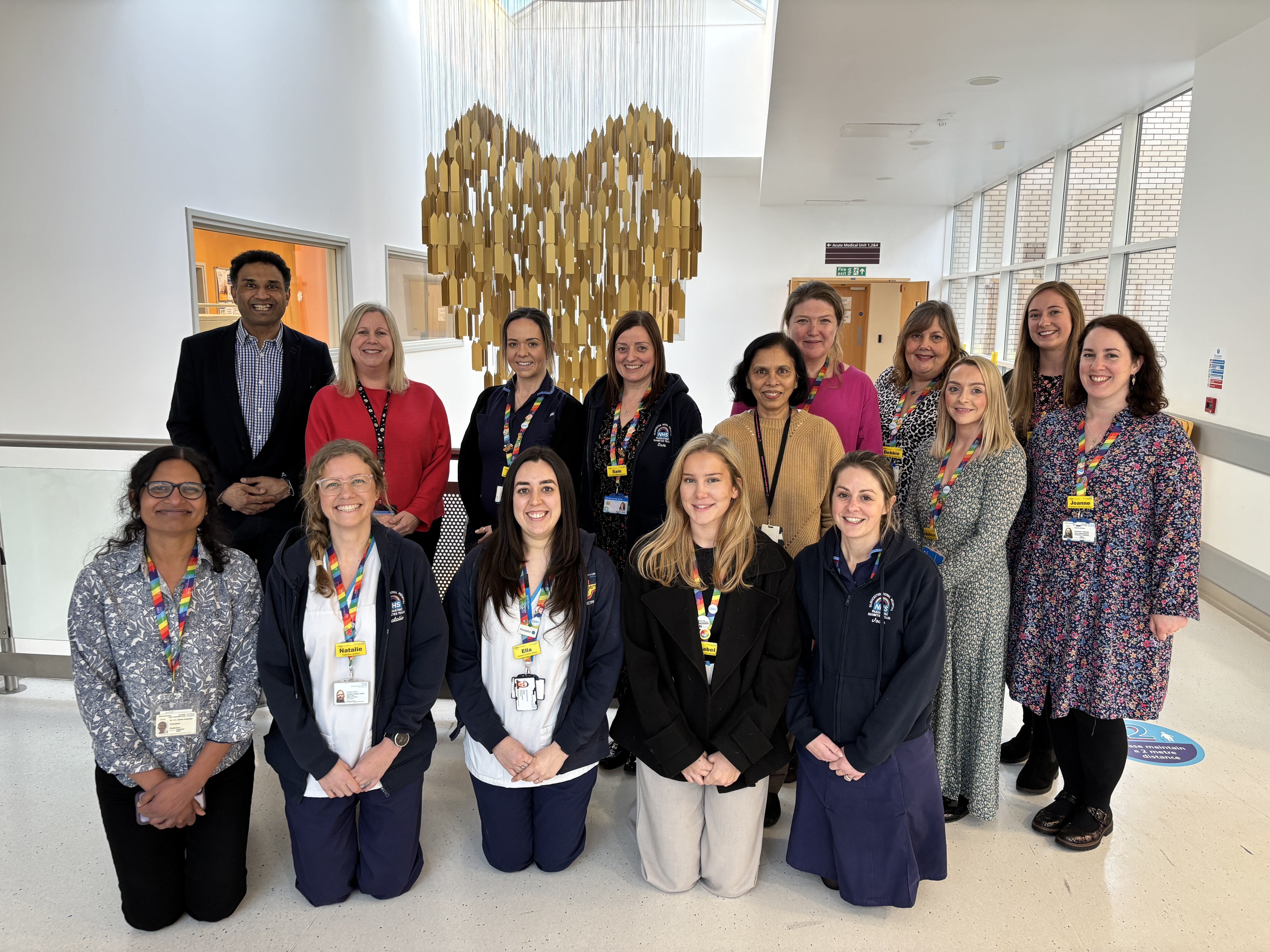
Paediatric Diabetes Team focuses on inclusive care for children across Gloucestershire
Gloucestershire Hospitals' children’s diabetes team is transforming the way it delivers care after adopting a nationally recognised approach to reducing health inequalities, helping to ensure services are more inclusive and accessible for every family.
The Gloucestershire Paediatric Diabetes Service, which supports around 290 children and young people across a wide rural area, has introduced a series of changes following its involvement in the Poverty Proofing® programme delivered by Children North East.
“I think every team in the country should do Poverty Proofing®. It has had a really positive impact on our team,” said one member of staff.
Understanding the barriers families face
Based across Gloucestershire Royal Hospital and Cheltenham General Hospital, the multidisciplinary team includes consultants, nurses, dietitians, psychologists, family support workers and administrative staff. Together, they provide comprehensive care for children living with diabetes across communities including the Forest of Dean, Stroud and the Cotswolds.
Although Gloucestershire is often seen as an affluent county, the team identified clear differences in access to diabetes technology such as insulin pumps and continuous glucose monitoring (CGM).
“We recognised there was definitely a discrepancy in uptake of technology. Even though our area looks affluent on paper, the skew was still there and quite significant."
Paediatric Diabetes Team member
The service was able to pay far greater attention to the hidden financial pressures many families face, including travel and parking costs, energy bills for medical devices and children missing free school meals due to clinic appointments.
“One of the biggest shocks for me was realising that children on free school meals were missing lunch because their appointments were over lunchtime and that became another financial burden for families.”
Taking action to be more inclusive
Through training and an in-depth audit process, the team reflected on how everyday practices could unintentionally create barriers to care. This has led to a range of practical changes designed to support families more effectively and ensure a more inclusive service.
These include:
- Providing clear information on affordable parking and travel options
- Offering guidance on low-cost treatments for managing low blood sugar
- Working with charities to improve access to digital devices needed for care
- Introducing earlier conversations about financial pressures at diagnosis
- Reviewing clinic times to reduce the impact on free school meals
“We used to think we were being helpful by adding more appointments. Now we ask whether we can support families in different ways that don’t add to their burden.”
The team has also changed how it offers diabetes technology, moving to a fairer approach that ensures all families are supported to access the tools they need.
“We had to confront our own anxieties about safety and risk. But Poverty Proofing® gave us the confidence to say we will work with every family to make technology starts as supported and safe as possible.”
Supporting the whole family
A key part of the service’s success has been its dedicated link worker role, which helps families navigate challenges beyond clinical care, such as housing, benefits and school issues. The link worker bridges the gap between families and clinicians, supporting with benefits forms, housing letters and school issues, which can take a huge burden off parents.
This holistic approach reflects the Trust’s commitment to inclusivity, recognising that high-quality healthcare means understanding and responding to the wider circumstances affecting patients’ lives.
Making a lasting difference
While formal evaluation is ongoing, early signs are encouraging. Staff report greater confidence in discussing financial concerns and families are experiencing more consistent access to diabetes technology and support.
The team suggest that the Poverty Proofing® programme offers a practical model for others looking to reduce health inequalities.
By embedding poverty-aware practices into everyday care, the Gloucestershire Paediatric Diabetes Service is helping to ensure that every child and young person, regardless of background, has the opportunity to achieve the best possible health outcomes.
“It’s reshaped our service for the better. We’re more open, more honest and more proactive about reducing barriers for families.”
Paediatric Diabetes Team member