Lactate (CSF)
Chemical Pathology
Clinical Biochemistry
Background information
- Cerebrospinal fluid (CSF) lactate concentrations normally parallel blood levels, but in cases of biochemical alteration in the central nervous system, CSF lactate may change independently of blood levels.
- Raised levels of CSF lactate may occur with severe cerebral hypoxia or genetic lactic acidosis, intracranial haemorrhage, bacterial meningitis and epilepsy.
- Raised CSF lactate concentrations may be predictive of bacterial meningitis.
Please note, this test is rarely indicated as it seldom adds information to the usual Microbiology CSF investigations.
Patient preparation
- No specific patient preparation required
Sample requirements
- A minimum of 0.25mL CSF (preferably tap #2 or #4) taken into a fluoride-oxalate tube or a plain universal container sent immediately to the laboratory.
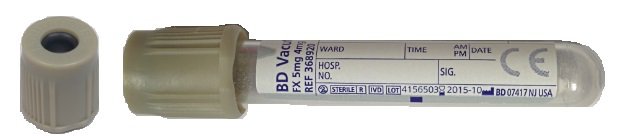
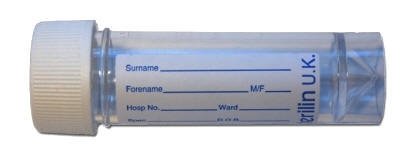
- Please note: 1 mL of CSF is approximately equal to 25 drops from the Luer connector of the needle
Storage/Transport
- DO NOT SEND CSF SAMPLES VIA THE AIR TUBE. SAMPLES MUST BE TAKEN BY HAND TO PATHOLOGY RECEPTION
- If other CSF investigations are required please check the CSF Sample requirements webpage for further details.
- Samples from CGH will be analysed in the GRH Pathology department.
Required information
Relevant clinical details. State tap number and date and time of lumbar puncture on samples, along with required patient identification details.
Turnaround times
Samples are normally analysed within one hour of receipt in the assaying laboratory. The test can be ordered urgently.
Reference ranges
The adult reference range for CSF lactate is 1.1 – 2.4 mmol/L.
For diagnostic purposes, the results should always be assessed in conjunction with the patient’s medical history, clinical examination and other findings.
Further information
To learn more about CSF analysis, visit Lab Tests Online.
Page last updated 06/11/2025