Paracetamol
Clinical Biochemistry
Background Information
- Paracetamol (also known as acetaminophen) is a widely used drug for the treatment of mild to moderate pain and fever.
- Measurement is indicated in cases of known, or suspected, overdose.
- Overdose may be be deliberate (usually in the context of self harm) or accidental (ingested with intent to treat pain or fever).
- Clinicians should access TOXBASE, the database of the National Poisons Information Service (NPIS), or contact the helpline for medical professionals (0344 892 0111) for advice on risk assessment and management.
Patient Preparation
No specific patient preparation is required.
Sample Requirements
- Samples should normally be collected at 4 hours or more after a suspected overdose.
- Earlier sampling may be unreliable as drug absorption and tissue distribution may still be active.
- Further sampling after this time is unlikely to be helpful to clinical management.
- Also request liver function tests on the same sample (LFTs).
For adults, blood taken into a 5mL gold top gel tube (or rust top for the Acute Unit)

For children, blood taken into a 3.5mL rust top gel tube

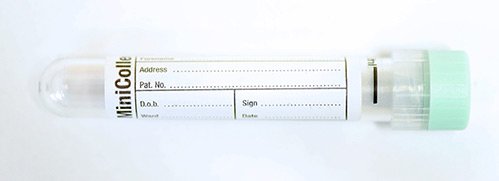
For infants, blood taken into a 0.8mL minicollect lithium heparin tube
Storage/Transport
Send at ambient temperature to the laboratory.
Required Information
Relevant clinical details, including time of ingestion, dose/number of tablets ingested and time blood sample taken.
Turnaround Times
The assay is run throughout the day and night.
The in-lab turnaround time is less than 24 hours.
The test can be ordered as an urgent request with results available within 1 hour.
Interpretation of Results
- Results are reported in mg/L.
- Please refer to TOXBASE for information on risk assessment and management.
- All cases of deliberate self-harm should be referred for medical assessment irrespective of reported dose or paracetamol concentration.
Further Information
To learn more about paracetamol please visit Lab Tests Online
Page last updated: 15/04/2026 | Page last reviewed: 15/04/2026