We use cookies to provide you with a better service. Carry on browsing if you’re happy with this or read more about our cookie policy and privacy policy.
By Dr Hina Iftikhar, Dr Seema Alaee, Dr Jessica Bennett, Dr Rachel Kaminski, Dr David Windsor, Dr Charlie Sharp
It is essential that your bowel is empty for this investigation. In order for your bowel to be empty please follow the instructions below.
You have been referred this page because you have Type 1 Diabetes. If you are ill you will need to test your blood for ketones and follow the sick day rules. This page gives you information about testing for ketones, when and how to test for them and sick day rule guidance.
The quality of laboratory investigations can depend not only on the quality of the specimen, but also on the quality of the information which we receive with the specimen. Inadequate information may lead to sample rejection, inappropriate testing or a delay in testing whilst further information is sought.
This page gives you information about carbohydrates and the recommended portion sizes for women with diabetes during their pregnancy.
‘Changing Places’ are specialist facilities for disabled people requiring assistance from 1 or more carers, or who need the larger manoeuvring space provided
The information on this page is for patients having a bladder tumour removed by a Trans Urethral Resection of Bladder Tumour (TURBT) operation.
This page provides information for patients who have been advised by the hospital to use St Mark’s formula electrolyte drink. Instructions for making the drink and how to get the ingredients needed are also included.
You have been given this page as you are anaemic with low iron levels in your body. Your doctor has suggested that you receive Ferinject® which is a special type of iron preparation given through a drip. Ferinject® is used instead of iron tablets.
It is essential that your bowel is empty for this investigation. In order for your bowel to be empty please follow the instructions below:
This page provides information for patients who have been diagnosed with the condition cystinuria and advice on how to try to reduce the risks of developing future stones.
This page covers some of the most important things that have been discussed with you during admission. The information on this page aims to help you through the first few weeks following diagnosis and also gives you advice and guidance to help you to make the safe transition from hospital to home.
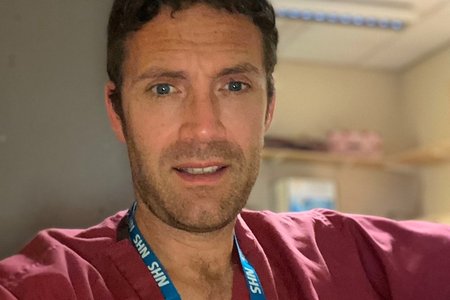
Dr Brady is a Consultant Cardiologist with a sub-specialty in Interventional Cardiology, focusing on the investigation and treatment of coronary artery disease. Dr Brady completed his medical training at the University of Leicester where he was awarded an Honours degree and the Very Reverend Derek Hole Prize in Cardiovascular Medicine (2012). He was awarded an MD by the University of Birmingham in 2022 having undertaken research in atrial fibrillation and heart failure. He completed his training in Interventional Cardiology at the Bristol Heart Institute and the Royal Bournemouth Hospital.
With every result produced by a laboratory there is an associated uncertainty, which may be attributed to a number of small variations arising at any stage of the analytical process, from sample collection to analysis. It is important to understand that uncertainty is not the same as an error. An error implies that there is a difference between a measured value and the true value caused by an unknown factor, whereas uncertainty is an acceptable interval within which a result can fall. We are able to predict this interval by calculating the measurement uncertainty (MU) for tests within our repertoire.
Microbiology