We use cookies to provide you with a better service. Carry on browsing if you’re happy with this or read more about our cookie policy and privacy policy.
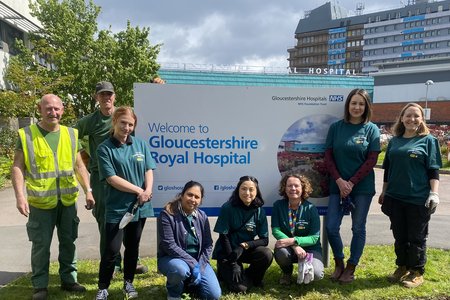
Ward 9B specialises in treating general medical patients. It is located on the ninth floor of the Tower Block at Gloucestershire Royal Hospital.
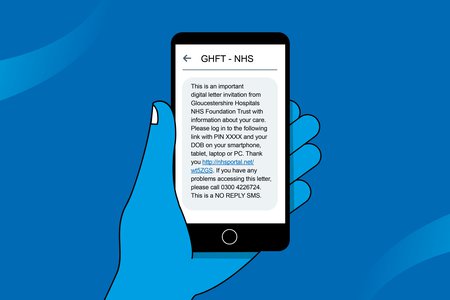
Patients on a waiting list at Gloucestershire Royal or Cheltenham General Hospitals are being contacted via text message or postal letter as part of our work to reduce the delays caused by the pandemic.
Work has begun thanks to a generous grant from the Greener Communities Fund from environmental charity Hubbub and NHS Charities Together, funded by proceeds from the Starbucks 5p cup charge.
This page contains information about ‘dry eye’ which is a common ophthalmic (eye) condition. Dry eye is sometimes called ‘dry eye syndrome’ or ‘dry eye disease’.
This page is a guide to foam sclerotherapy injection treatment for varicose veins and should answer some of the questions you may have. Please note that this page is not a complete list of all information about varicose veins.
This page gives you information about scleral contact lenses, how to insert the lenses and the care and cleaning needed.
This page will give you information about having hernia surgery. It also answers some of the commonly asked questions and outlines some of the risks and possible complications linked with hernia surgery.
Find out more about how we use patient information at Gloucestershire Hospitals NHS Foundation Trust. This notice will also apply, where appropriate, to information we hold about patients’ carers relatives and next-of-kin.
The information given here is intended for use by healthcare professionals. Please see Lab Tests Online-UK for more general advice, links and background.
30mL sterile Universal
CAPD fluid cell count, microscopy & culture
The Trust is developing a new Membership Strategy and would welcome your involvement and feedback to help co-design the work we do.
Liver cancer affects the liver and this is a large organ at the top right side of your abdomen that helps you to digest your food and removes toxins.
We collect, store and process information about prospective, current and former staff. This notice explains how we use your information, and your right to control how we use it.
Cancer antigen 15.3 (CA 15-3) should only be used to determine response to therapy in patients with metastatic breast cancer or for the early detection of recurrence in patients with previously treated stage II and stage III breast cancer. Requests should therefore only be made as advised by the specialist secondary care team.
This page provides information on wound care after your skin surgery
This page is designed to help people who are bereaved when a death occurs in the hospital. It explains procedures such as registering a death and arranging a funeral.