We use cookies to provide you with a better service. Carry on browsing if you’re happy with this or read more about our cookie policy and privacy policy.
You have had an endometrial biopsy and/or a hysteroscopy performed. The results of the hysteroscopy have been discussed with you today. This page will give you information about what to expect after having a hysteroscopy and when to expect the results from an endometrial biopsy.
Every June, Dietitians Week celebrates the vital work of registered dietitians across the UK — the only qualified health professionals who assess, diagnose and treat dietary and nutritional problems at both individual and wider population levels.
This page gives you information about Photodynamic Therapy (PDT) for the age-related eye conditions macular degeneration and Central Serous Chorioretinopathy (CSCR). The aim of this page is to explain what to expect at all stages of the treatment and to answer some of the commonly asked questions.
There are lots of reasons to be physically active before, during and after cancer treatment. This page provides you with advice and support on:
You have been told that you are colonised with, or have an infection with a multi-drug resistant organism. The information on this page answers some of the commonly asked questions about this condition.
Novoneel Nandi has a focus on: care of the Elderly and Parkinson's disease.
February is LGBTQ+ history month, where diversity and inclusion is vital for performance, wellbeing, and making a meaningful difference to all colleagues.
This page gives you information about appendicitis, including the risks and benefits of having the appendix removed.
by Irene Stratton
The Gloucestershire Cancer Prehabilitation Service will be temporarily suspended from 1 August 2025 due to ongoing staffing challenges and wider service pressures.
The Getting It Right First Time (GIRFT) programme has appointed a leading orthopaedic surgeon from the Gloucestershire Hospitals NHS Foundation Trust, to work as a clinical ambassador in its London hub.
Where to turn if you’re struggling with becoming a parent
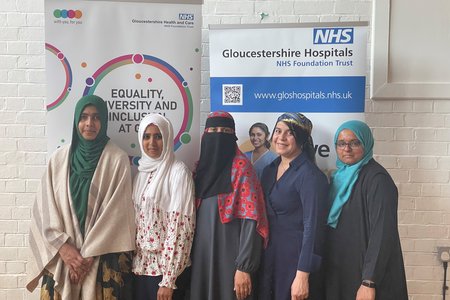
A joint NHS community project in Gloucestershire, to tackle health inequalities, has been shortlisted for a national award.
This page gives you information about having a nuclear medicine scan, including any preparation required and the equipment used.
This page explains what High Flow Nasal Oxygen (HFNO) is and why it is part of your treatment. It may also answer some of the questions that you may have about HFNO. The information on this page is not meant to replace the consultation between you and your medical team but may help you to understand more about what is discussed. Please do not hesitate to speak to the doctor, nurse or physiotherapist if you have any further questions.
You may be aware of a BBC report on maternity services here at the Trust. This page provides some background, as well as answers to questions you may have.
You have been advised to have a gastroscopy, which you may also have heard being called an endoscopy or OGD (meaning an oesophageal-gastro-duodenoscopy). A gastroscopy will help us to investigate the cause of your symptoms. It is important that you read this page before your appointment so that you understand what will happen during this procedure and the preparation involved.
by Lowri Bowen
This month's Board Meeting took place on the 25 November 2016, chaired by Peter Lachecki in the Lecture Hall, Redwood Education Centre, Gloucestershire Royal Hospital.