We use cookies to provide you with a better service. Carry on browsing if you’re happy with this or read more about our cookie policy and privacy policy.
We provide care for patients with a broad range of rheumatic diseases, offering patients diagnosis, treatment, and, when appropriate, long-term management of their condition.
On Earth Day on 22 April 2024, we are part of a One Gloucestershire campaign designed to promote the correct use of gloves, which are often worn unnecessarily
You will already have been told by a member of the team during a telephone call and appointment letter that you must not eat anything for 6 hours before your procedure, this includes chewing gum or sucking sweets. You will be able to continue sipping clear fluids, including squash/cordials and fruit juice (without bits), right up until the time of your appointment.
by Dr Paul Perkins
This page gives you information about what to expect when leaving the Emergency Department after having had sedation. You have been given a sedative medication to assist with your procedure. You may experience a short period of memory loss during the time the sedation is effective. This medication may also impair your judgment for up to 24 hours. Sedation is safe with very few side effects but most patients have feelings of tiredness afterwards. Some people may believe they are fine and unaffected by the medication but their reactions will be slower. This is similar to how some people may feel after having alcohol.
by Dr Mark Bailey
by Janice Allen, Resuscitation Officer
This page gives you information about the medication nortriptyline which you have been prescribed to reduce the pain of vulvodynia. Vulvodynia is pain in the vulva (area around the outside of the vagina) that lasts at least 3 months but does not have a specific cause.
Do you feel like your life is on hold waiting for the pain to get better? Are you stuck, wishing that the pain would just go away? Do you struggle with the idea of accepting your pain? Do you feel that pain has taken away who you used to be? Acceptance and Commitment Therapy (ACT) could help you live your life again despite having pain.
We are an NHS trust of around 9,000 people, providing care for the population of Gloucestershire and beyond.
The Surgical Admissions Suite cares for patients who are having elective (planned) surgery and who are expected to stay in hospital overnight or longer. The unit is located in the main corridor from the Tower entrance, and is situated above the Pharmacy department. There is a lift to the right hand side of the stairway.
This page explains what an opioid is and why it is beneficial to some patients who have acute pain.
The way we go about our work is as important as what we do. Our values guide our behaviour, whether with our patients, with one another or with wider stakeholders.
by Samantha Lignelli
This page provides you with information about how to care for your Peritoneal Dialysis (PD) catheter following insertion. A PD catheter is a tube that is inserted into your abdomen to allow for peritoneal dialysis. After the PD catheter has been inserted it should be cared for as advised by the PD team. This will help to reduce the risk of infection or displacement. It will also provide a smooth start to PD. You will be given detailed instructions for long term care by the PD nurse looking after you.
Our five year strategy
The pelvic floor muscles can help with bladder and bowel control. This page tells you how to strengthen your pelvic floor muscles.
This information is for people who need screening for MRSA before they go into hospital for an operation or any other treatment. Please read the instructions before carrying out the procedure. If you have difficulty taking the swabs yourself, ask someone to help you.
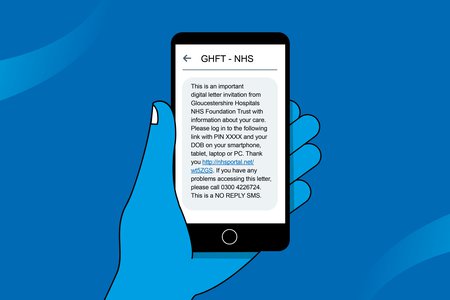
Patients on a waiting list at Gloucestershire Royal or Cheltenham General Hospitals are being contacted via text message or postal letter as part of our work to reduce the delays caused by the pandemic.
Join #TeamNHSGlos for a brand new event in Gloucester City Centre!