25-Hydroxyvitamin D (Vitamin D)
Clinical Biochemistry
Background Information
Routine screening of vitamin D is not recommended in asymptomatic individuals.
- Monitoring of nutritional supplementation is not required.
- Monitoring of high dose therapy should be done >3 months after replacement to assess response; however, calcium levels should be checked after one month and more frequently if significant renal impairment is present.
When to check vitamin D level:
In line with local policies, Vitamin D measurement is only indicated in the following:
- Patients with bone diseases that may be improved with Vitamin D replacement e.g. Osteomalacia, Osteoporosis, Paget's
- Before commending potent anti-resorptive therapies e.g. Zolendronic acid, Denosumab
- Patients with musculoskeletal symptoms that might be attributable to Vitamin D deficiency e.g. suspected Osteomalacia
- Patients with melanoma
Patient Preparation
No specific patient preparation is required.
Sample Requirements
If the patient is on high dose biotin therapy (>5 mg/day), collect the sample at least 8 hours after the last dose.
Please note there is a minimum retesting interval for Vitamin D of 3 months.
For adults, blood taken into a 5mL gold top tube (or rust top for the Acute Unit)

For children, blood taken into a 3.5mL rust top tube

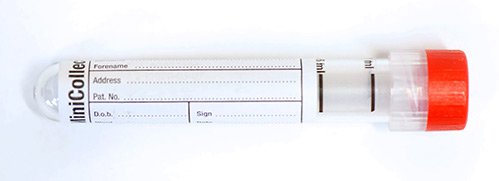
For neonates, blood taken into a 1.0mL minicollect plain tube
Storage/Transport
Send at ambient temperature to the laboratory. If unavoidable, samples can be stored refrigerated overnight.
Required Information
Relevant clinical details including the reason for the request and any current supplementation.
Turnaround Times
Samples are assayed locally at GRH, with results normally available within 72 hours.
Reference Ranges
- 25-hydroxyvitamin D is assayed by immunoassay with total 25-hydroxyvitamin D reported.
- Significantly elevated protein levels can lead to falsely high results.
- Seasonal variation is observed with vitamin D levels with values being higher at the end of summer and lower in winter due to changes in levels of UVB exposure.
- Cut off values are based on recommendations in the National Osteoporosis Society Guidelines 2018.
| Vitamin D nmol/L | Vitamin D status |
|---|---|
| > 50 | Sufficient for almost the whole population |
| 25 - 50 | May be inadequate in some people |
| < 25 | Deficient |
Vitamin D replacement is appropriate for deficiency.
For insufficiency (vitamin D of 25 - 50 nmol/L), treatment may be appropriate in some patients. Please refer to local treatment guidelines for further information.
Further Information
To learn more about Vitamin D access links below:-
Page last updated: 05/05/2026 | Page last reviewed: 05/05/2026