Gentamicin
Clinical Biochemistry
Background Information
- All patients receiving gentamicin must have levels monitored, primarily to avoid renal toxicity, therefore renal function should also be regularly monitored.
- For most patients requiring a gentamicin course, a once daily dosing regime can be used. Please refer to the Once Daily Gentamicin Policy Summary for more information on this regime.
- Gentamicin levels can be taken at any time of day but the collection time should be convenient for the patient and for the testing laboratory – sampling and testing between 12 midnight and 6 am should be avoided.
- Most gentamicin levels are a planned, non-urgent investigation.
- Gentamicin levels are performed both at CGH and GRH Clinical Biochemistry – please send requests using Chemistry request forms to avoid delays in sample receipt and analysis.
Patient Preparation
Please refer to the Antibiotic Guidelines Page for information regarding patient preparation.
Sample Requirements
Samples must NOT be taken via lines
For adults, blood taken into a 5mL gold top gel tube (or rust top for the Acute Unit)

For children, blood taken into a 3.5mL rust top tube

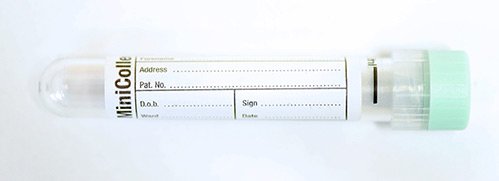
For neonates, blood taken into a 0.8mL minicollect lithium heparin tube
Storage/Transport
Do not store. Send at ambient temperature to the laboratory as soon as possible.
Required Information
- Gentamicin dose and frequency
- Time of last dose
- Date and time sample collected
Turnaround Times
- The assays are run throughout the day and night. The in-lab turnaround time is less than 6 hours. Results are made available as soon as they are technically approved. Additional comments may be added later by the Consultant Microbiologist when results are clinically approved.
- The test can be ordered as an urgent investigation.
Therapeutic Ranges
Please refer to the Antibiotic Guidelines Page for information regarding therapeutic ranges.
If there is any doubt regarding interpretation, or a dose change needs to be discussed, contact the Consultant Microbiologist.
If you need advice please contact the duty consultant microbiologist or ward pharmacist.
Further Information
Page last updated: 17/12/2025 | Page last reviewed: 17/12/2025