We use cookies to provide you with a better service. Carry on browsing if you’re happy with this or read more about our cookie policy and privacy policy.
You are due to have a flexible cystoscopy. This page gives you information about the procedure and answers some of the commonly asked questions.
Our amazing community fundraisers help our local NHS hospitals do even more
National Apprenticeship Week is all about recognising the impact of apprenticeships and T-Level placements in shaping the future of healthcare.
This page provides information for women and birthing people who have been identified as being at risk of having a preterm (premature) birth. We hope that this information will help you to understand the risk factors and how the Preterm Birth team will support you during pregnancy to try to reduce the risk.
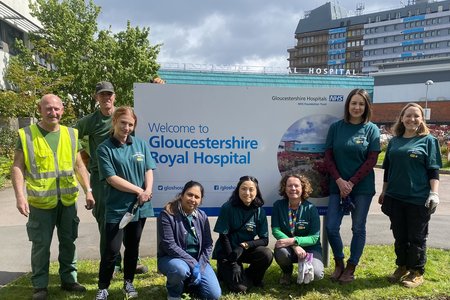
volunteer massage therapists for oncology
Your child has had an injury to the arm which has been diagnosed as a buckle fracture. This injury is treated like a sprain and will not cause any long-term problems. The following information aims to explain what a buckle fracture is and how to support a child while it heals.
Renal dietitians, more commonly known as kidney dietitians support the dietary needs of people with chronic kidney disease (CKD).
This page gives you information which will help you to prepare for your balance assessment at the Hearing Services Department. You will be seen by audiologists specialising in hearing and balance. The assessment will take up to 2 hours.
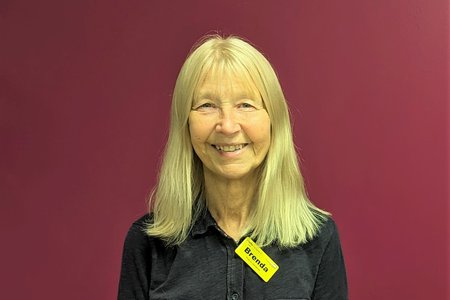
Thanks to donations, patients and their loved ones at the Gloucestershire Oncology Centre have the opportunity to write poems with our poet in residence Brenda Read-Brown.
It is essential that your bowel is empty for this investigation. In order for your bowel to be empty please follow the instructions below.
This page explains what a hysterectomy involves and answer some of the more commonly asked questions.
4ml EDTA or, preferrably, a clotted serum sample (5ml Gold-top SST tube or 3.5ml Rust-top gel tube)
Today the nursing and midwifery teams at Gloucestershire Hospitals take an important step in delivering a key component of our nursing and midwifery excellence programme. The establishment of our Nursing and Midwifery Excellence (NaME) Collective Leadership Council brings shared decision making to life.
The NHS in Gloucestershire is urging people to keep healthy over the Easter break by planning in advance, taking some simple steps and thinking twice before heading to A&E or calling 999 when it’s not an emergency.
This page explains what can cause chest trauma and chest wall damage. It also provides advice to help with your recovery.
The home enteral feeding team (HEFT) provide a countywide service to patients in Gloucestershire. Find out what we do, meet the team, and check how to make referrals.
The types of medication prescribed by rheumatology include:
The paediatric dietetic team has put together a list of useful links and resources for you to have a look at whilst you wait for your appointment. They are divided into specialist areas, choose the one that is applicable to you or your child.
You have been prescribed apixaban for a heart condition called nonvalvular atrial fibrillation (AF). This type of medication is known as direct-acting oral anticoagulant (DOAC). This page gives you information that you might find useful about atrial fibrillation and the apixaban medication. You will find a written information leaflet and a Patient Alert Card in your apixaban medication pack. Please read the information and complete the Patient Alert Card. The Patient Alert Card provides you with the required apixaban information and the importance of taking the medicine. You should keep the Patient Alert Card with you.
This page gives you information about performing Intermittent Self-Dilatation (ISD).