We use cookies to provide you with a better service. Carry on browsing if you’re happy with this or read more about our cookie policy and privacy policy.
Changes to Cheltenham A&E during BMA Industrial Action 17 - 22 December
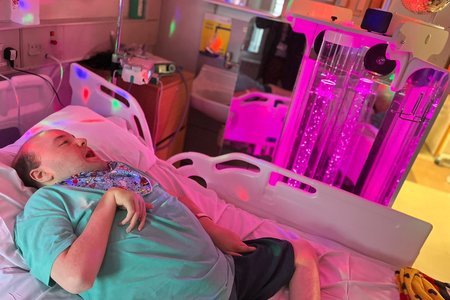
Thanks to your support, we have been able to fund two new portable sensory trollies; the Rhino Sensory Voyager, for patients on our wards.
This page gives you important information about having a bronchoscopy. It should also help to answer any questions you may have.
Stroud maternity unit is a small midwife led centre that helps deliver around 300 births every year, and offers a home from home environment for new parents.
Like other areas across the country, Gloucestershire is seeing a sharp increase in Flu and other respiratory illnesses and this is being reflected in the number of people coming to our hospitals.
No of days cycling: 3-daysDistance: 276.2 milesDifficulty Rating: Medium+Location: London - Dunkirk - Ouddorp - AmsterdamNon refundable registration Fee: £150
Take on this amazing four day challenge from London to Amsterdam with #TeamNHSGlos
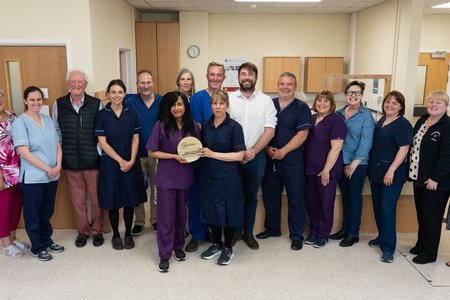
Gloucestershire Hospitals has scooped a national award for its commitment to patients living with incurable blood cancer.
This page explains what an allergic reaction is and how to care for yourself should this happen.
Information on how to take the best photographs of your skin lesion or rash.
This page answers some of the questions you may have about your humerus fracture. It also gives you advice and information about how to manage at home. The humerus is the bone in the arm between your shoulder and elbow. Your injury is a fracture to this bone, near the shoulder. There is often quite a lot of bruising and swelling of the arm over the first few weeks. This is normal and resolves by itself as the fracture heals.
You have been referred for a tunnelled line, sometimes referred to as a catheter. This page aims to answer some of the questions you may have and explains how this line is different to other cannula or lines you may have had before. Also included is information about the risks and benefits of having Tunnelled Central Venous Catherter (CVC) and what to do if you have any problems. Please contact the team who provide your care if you need any further information about anything on this page.
This page gives you general discharge advice following your day surgery procedure. It is important to remember that you have had a general, local or spinal anaesthetic or sedation for your procedure. Day surgery does not mean day recovery and you must go home and rest.
The information on this page answers some of the commonly asked questions about Carbapenemase-Producing Enterobacterales (CPE). This includes why and how patients are screened and information for patients who test positive.
We are committed to integrating sustainable development into our core business and ensuring our use of resources is efficient.
The COVID-19 pandemic has impacted on patient care, particularly waiting times for planned operations, procedures, diagnostic tests and appointments. Good progress is being made in tackling these waiting times.
GHNHSFT works in collaboration with Approved Education Institutes (AEIs) across the region to provide practice placements for Undergraduate Nursing Students. We hope that the information you find on these pages will be useful and give you an insight into your placement and the learning opportunities available. We are very much looking forward to having you on placement with us.
This page gives you information about having a Computed Tomography (CT) scan of the head or sinuses. It explains how the procedure is carried out and some of the possible risks.
This page provides information for patients due to attend the Low Vision Aid (LVA) Clinic.
This page explains what psychological support is available for kidney patients. If you have any questions, please speak to a member of the renal team or contact the psychology team on the phone number at the end of this page.
The wrist is the most complex joint in the body and the term ‘arthritis‘ is used to describe a swelling in a joint.