We use cookies to provide you with a better service. Carry on browsing if you’re happy with this or read more about our cookie policy and privacy policy.
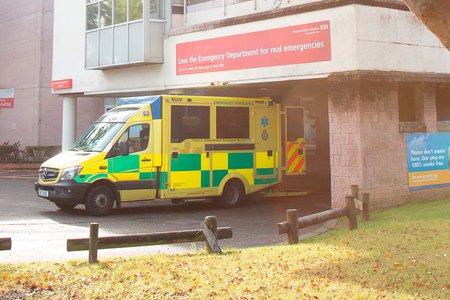
Cheltenham General Hospital’s A&E department resumes its night-time nurse-led service on 30 June in line with plans to restore the service to its pre-pandemic status
by Jennifer Veeren
Whether raising a concern, saying thank you or making a complaint, there are many ways to share your feedback with us.
Here you'll find answers to the questions we get asked the most about.
We're holding an information day on 20 March, in partnership with the Gloucestershire Kidney Patients' Association
You can find information here about improvements to our maternity services, as well as updates on our progress
We are bringing comfort, connection and escape to patients through the power of virtual reality (VR).
The 14th GSQIA Graduation and Awards Ceremony took place on Monday, 30th of September 2019 from 9:30am – 12.30pm in the Lecture Hall at Redwood Education Centre, Gloucestershire Royal Hospital.
Our hospitals are and remain extremely busy and colleagues at both our hospitals have been working hard throughout the festive period to care for our patients
This page has been written to give you information about a medicine called magnesium sulphate. Magnesium sulphate (MgS04) is a medicine offered to women whose baby will be born between 24 and 30 weeks of pregnancy. This is because we know that it can protect some babies from developing cerebral palsy. You will have been referred this page to read because either a decision has been made by the doctor that your baby needs to be born early, or you have gone into premature labour and it is believed that having the magnesium sulphate would be of benefit to you and your unborn baby.
The information on this page is about skin conditions which affect the vulval skin. These skin conditions are not cancer but in some women the cells over time can become cancerous. This is why they are called “pre-malignant conditions”.
The Gloucestershire Liver Unit (GLU) provides inpatient and outpatient care across two main hospital sites in Cheltenham and Gloucester. It has an active and growing clinical research programme in association with the NIHR.
We are sorry to hear that your baby has died and would like to offer our support at this time. There are many decisions to be made at this sad time and you may be considering whether to take your baby home before their cremation or burial. The following information is given so that you are aware and understand the choices open to you.
The information on this page answers some of the commonly asked questions about Carbapenemase-Producing Enterobacterales (CPE). This includes why and how patients are screened and information for patients who test positive.
A BBC Panorama documentary on maternity will was broadcast on Monday 29 January 2024.
To mark national No-Smoking Day on 13 March 2024, our Tobacco Free Team will be manning a stand in the Main Atrium at Gloucestershire Royal Hospital (GRH)
*Interpretation of LH and FSH results in children should be discussed with a Paediatric Endocrinologist
Gloucestershire Hospitals has successfully eliminated the loss of syringe pumps used in palliative and end-of-life care, improving patient safety, reducing delays to symptom relief, and releasing valuable time back to clinical teams.
Our £17.5m appeal looks to create a new cancer centre that will offer local patients the very best environment for treatment, healing and recovery.