We use cookies to provide you with a better service. Carry on browsing if you’re happy with this or read more about our cookie policy and privacy policy.
At Gloucestershire Royal Hospital, we believe that every baby being born is special. During your caesarean, there are ways in which we can help to assist you having an individual experience for the birth of your baby. There are many combinations of the listed choices which may make the birth experience more enjoyable and less stressful. If this is something you would like to consider for your caesarean birth then please ask your midwife or obstetrician for more information.
By Dr Hina Iftikhar, Dr Seema Alaee, Dr Jessica Bennett, Dr Rachel Kaminski, Dr David Windsor, Dr Charlie Sharp
In their first games, the Gloucestershire team have triumphed with three silver medals and one bronze at the British Transplant Games in Nottingham this weekend.
Have you had a baby in the last three years? Did you use the Maternity Triage Service? If so we would love to hear from you!
They are funded by the Department of Health to improve the health and wealth of the nation through research.
About our Adult diabetes and endocrinology team, your appointment and how to contact us
This page gives you information about aftercare following your CT lung biopsy.
by Dr Timothy Schrire, Dr Joseph Tustain and Dr Sian Williams
No specific preparation required
Fit for the Future is part of the NHS in Gloucestershire’s vision for specialist hospital services at Cheltenham General and Gloucestershire Royal Hospitals.
by Khoboso Hargura
This page explains about local steroid injections and their use, including the possible side effects. Local steroid injections have been suggested for you because they are considered an important part of the treatment for many types of hair and scalp disorders. These include alopecia areata, frontal fibrosing alopecia, folliculitis decalvans and lichen planopilaris.
By Dr Hina Iftikhar, Dr Warren Doherty, Dr Charlie Sharp
No specific patient preparation is required.
by Claire Winchester
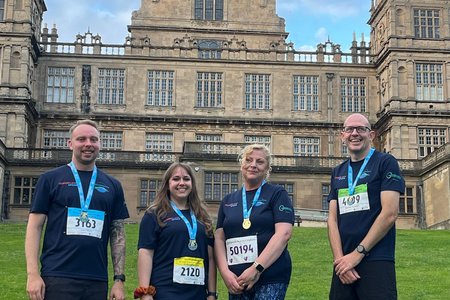
Cheltenham and Gloucester Hospitals Charity has been named the official charity partner for the event. We have a limited number of free places left to fill and we are calling for more runners to sign up to help raise money!
The two most common anticoagulants Warfarin and Unfractionated Heparin are monitored via the INR and APTT Ratio respectively. A baseline coagulation screen should always be requested prior to starting a patient on anticoagulants.
Resolving the Phlebotomy Industrial Action