Examination under anaesthetic (EUA)
Gynaecology procedure This page gives you information about having an examination under anaesthesia.
On this page
-
What is an examination under anaesthetic (EUA)?
-
Why am I having an EUA?
-
What will be examined?
-
What will happen during the procedure?
-
Will I have to sign a consent form?
-
Will I need a pre-operative assessment?
-
Risk of surgery
-
When do I need to stop eating and drinking?
-
What will happen on the day of surgery?
-
What will happen after surgery?
-
Going home
-
When can I resume my normal diet?
-
How long will I be in hospital for?
-
When can I go back to work?
-
What about my sex life?
-
When can I drive?
-
Follow up
-
Contact information
What is an examination under anaesthetic (EUA)?
An examination under anaesthetic is a procedure where you are given medication (anaesthetic) to make you fully asleep. This allows doctors to carefully and comfortably check your gynaecological health without causing you pain.
Why am I having an EUA?
The procedure may be recommended for different reasons.
- If cancer has not been confirmed. An EUA can help doctors look more closely at the area causing concern. They may take small tissue samples (biopsies) during the procedure to help make an accurate diagnosis.
- If you already have a cancer diagnosis. An EUA can help doctors understand the size and exact location of the cancer. This information is used to investigate your condition in more detail and to plan the most suitable treatment for you.
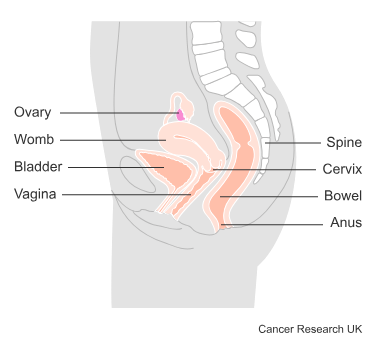
What will be examined?
During the procedure, the doctor may examine:
- The cervix (neck of womb), vagina and vulva,
- The womb,
- Bladder,
- Anus and rectum.
What will happen during the procedure?
Once you are in the operating theatre, you will be given anaesthetic so you are fully asleep. The anaesthetist will monitor you throughout the procedure. The doctor will then carry out the examination in a few different ways:
Visual examination
The doctor will look at the vulva, the entrance to the vagina, and the anus to check for any visible changes or abnormalities.
Manual examination
The doctor may perform an internal examination where a finger is inserted into the vagina and/or rectum to feel for anything unusual.
Using equipment
A speculum (a plastic instrument) may be placed into the vagina and opened slightly so the doctor can see the vaginal walls and cervix more clearly.
Sometimes the doctor may also look inside the bladder or the lower part of the bowel to check whether any problems have spread to nearby areas. Small tissue samples (biopsies) may be taken if needed.
Will I have to sign a consent form?
Yes. You will need to sign a consent form, usually on the day of your surgery. This is completed with the doctor or a member of their team. It gives you the chance to ask questions and talk about anything you are unsure of or worried about before the surgery goes ahead.
Will I need a pre-operative assessment?
A pre-operative assessment is carried out before your procedure to make sure it is safe for you to have an anaesthetic and to help plan your care. This may done in person or over the telephone.
During this assessment, staff will check your height, weight and blood pressure, ask about your past medical history, and review any medicines you are taking. You may also meet an anaesthetist, who will assess your general health and discuss any factors that could affect your anaesthetic.
Risk of surgery
Infection
If an infection develops, you may need antibiotics. Your doctor or the nurse who discharges you will explain the signs to look out for.
To help reduce the risk of infection, it is advised that you avoid using tampons if you have any bleeding after the procedure and for your first period afterwards.
Bleeding
Heavy bleeding (a haemorrhage) is rare, but if it happens you may need a blood transfusion or further surgery.
Light bleeding for up to a week after an EUA is common. Using sanitary pads instead of tampons can help lower the risk of infection.
Organ or structural damage
There is a small risk of injury to nearby organs such as the bladder, womb, or bowel. If this happens, you may need further treatment or surgery.
Pain or discomfort
Some mild discomfort is common after the procedure. This can usually manage with over-the-counter pain relief, following the advice of your healthcare team.
When do I need to stop eating and drinking?
- If your admission time is 07:30am, you will need to stop eating and drinking at midnight the night before.
- If your admission time is 12:00pm, you will need to stop eating and drinking by 06:00am on the day of surgery.
What will happen on the day of surgery?
You will arrive at the Day Surgery Unit, usually at either 07:30am or 12:00pm.
When you arrive:
- You will meet the doctor or a member of their team and complete the consent form
- You will see the anaesthetist
- Nurses will check your blood pressure and go through the theatre safety checklist with you
- If you are under 55 and still having periods, a pregnancy test will be carried out
- You will be asked to change into a theatre gown
What will happen after surgery?
You will wake up in the recovery area, where staff will monitor you as you come round from the anaesthetic. Once you are fully awake you will be taken back to the Day Surgery Unit. You will be offered a drink and something light to eat. Your observations, such as your blood pressure and pulse, will be checked regularly, and the nurses will also monitor you for any bleeding.
Going home
Most people are able to go home on the same day as their surgery. Before you are discharged, staff will check that you have met a few key recovery points:
- You have eaten and had something to drink
- You have passed urine
- Any vaginal bleeding is light
- Any pain or discomfort is well controlled with regular pain relief
When can I resume my normal diet?
You can return to your usual diet after your surgery. Some people may feel a little nauseated after anaesthesia and may prefer a light diet for a few days.
How long will I be in hospital for?
This procedure is usually done as a day case, which means you can normally go home on the same day as your surgery.
When can I go back to work?
Most people feel well enough to return to work 24 hours after the procedure, but this can vary depending on the type of work you do and how you feel afterwards. It is important to follow the advice given by your clinical team, as they can guide you based on your own situation
What about my sex life?
To support healing and reduce the risk of infection, vaginal intercourse should be avoided for one to two weeks after surgery, or until any pain or discomfort has settled. The exact timing can vary depending on the extent of the procedure.
When can I drive?
Most people are able to drive again 24 hours after surgery, as long as they feel well, are fully alert, and can safely control a vehicle. Your clinical team may give you specific advice based on how you recover, and it’s important to follow their guidance.
Follow up
If biopsies are taken, they will be sent to the laboratory. Results usually take between two and three weeks, and you will be contacted regarding a follow-up appointment to discuss them.
If nothing abnormal was found, a follow-up appointment is not normally required.
Contact information
If you have any concerns or questions regarding your surgery, please contact your Gynaecology Cancer Nurse Specialist or your GP:
Gynaecological Cancer Nurse Specialists
Tel: 0300 422 4047
Tel: 0300 422 3181
Email: ghn-tr.gynaecologycancernurses@nhs.net
Monday to Friday, 8:30am to 4:30pm
If we cannot take your call, please leave a short message with your name, MRN number, date of birth and contact number and someone will get back to you as soon as possible.