Pacemaker (PPM) Advice for going home
This page will give you information about your recovery following the implant of a Permanent Pacemaker (PPM) and it should be read in addition to the information you have already received.
On this page
-
Caring for your wound
-
Wound care and dressing removal
-
If you are concerned about your Pacemaker (PPM) wound
-
Restriction of arm movement
-
Pain Relief
-
PPM follow-up appointments
-
PPM identification information (PPM Passport)
-
Driving restrictions
-
If you are having other surgery or treatment
-
Exercises to prevent shoulder stiffness
-
Contact information
-
Further information
Caring for your wound
There are a number of things that you can do to look after your wound, lower the chance of infection and encourage healing. These include:
- Keeping the dressing clean and dry. Leave the dressing in place for 1 week; this means no showers or washing near the wound site for 1 week
- Avoid wearing tight clothing such as braces or bra straps over the wound
- Take care when wearing a seatbelt to avoid excess rubbing over the wound
Wound care and dressing removal
When a pacemaker is implanted the wound is closed with dissolvable stitches and a dressing is placed over the wound.
Please remove the dressing after 1 week following the procedure. If you have any concerns, contact the Arrhythmia Specialist Nurse for advice. The contact details are at the end of this page.
If we use glue or stitches that do not dissolve, we will discuss this with you, before discharge home.
If you are concerned about your Pacemaker (PPM) wound
Please contact the Arrhythmia Specialist Nurse immediately if you are concerned about your wound and/or surrounding skin.
Report any redness, swelling, oozing or new tenderness of your wound or surrounding skin. These may be early signs of wound or pacemaker site infection. Also contact us if you are concerned about the skin over the PPM feeling tight or becoming thinned.
Out of hours
Most wound problems can wait until normal working hours of 9:00 am to 4:00pm Monday to Friday, when you can contact your Arrhythmia Specialist Nurse for advice. However, if the wound or surrounding skin is opening and/or if you can see pus (discharge) then please attend your nearest Emergency Department, outside of these hours. We would expect you to be admitted to hospital. Please inform us if you are admitted or you remain concerned.
Restriction of arm movement
The PPM leads need time to settle into place. Therefore, for the first 4 to 6 weeks, we advise you not to lift your left arm (or right arm if the PPM is on that side) above shoulder height, or take part in any heavy lifting, pushing or pulling during these weeks. This will help to prevent the PPM leads from moving out of place.
We advise you to move your arm regularly to minimise the risk of a frozen shoulder or shoulder stiffness. There are examples of safe exercises later on this page.
Pain Relief
It is normal to feel some discomfort or pain after the implant of a PPM. When the local anaesthetic begins to wear off, you are likely to feel uncomfortable and will need to consider taking pain relief.
Paracetamol is used to treat mild to moderate pain and the dose is 1 gram (2 x 500 mg tablets), which can be taken every 4 to 6 hours.
The pain relief can take up to an hour to take effect. Do not wait for pain to become severe; mild pain is easier to control.
However, if further pain relief is required Codeine can be used to treat moderate to severe pain. This can be purchased at your local pharmacy. You can use this as needed alongside the paracetamol.
Pain relief may be required for a few days and up to a week following your PPM implant. Most pacemakers are placed under the skin and above the muscle. If your pacemaker is placed under the muscle, you will likely have more pain in the first week of recovery. You will need to consider pain relief more carefully.
It may be too painful to sleep on your side or stomach in the first few weeks post implant of PPM. Consider lying on your back, well supported by pillows and you may need a pillow under the arm on the PPM side, for comfort.
PPM follow-up appointments
You will need to attend your PPM appointments as these are an important part of your ongoing care. Attending the appointments will allow us to check that your PPM is working properly.
Your first appointment will be 6 weeks after the PPM was fitted. If you are unable to attend, please contact the number on the appointment letter to rearrange.
Further follow-up appointments will be at yearly intervals.
All follow-up appointments will be at Gloucestershire Royal Hospital
PPM identification information (PPM Passport)
Details of your pacemaker and leads, will be given to you on the day of your implant, before going home. This will be a card or a printed document that you should keep with you at all times. You may wish to take a picture or a photocopy of this document.
If you plan to travel by air to another country, you will need to show this document at the airport.
Driving restrictions
You must let the DVLA and your insurance company know that you have had a PPM implanted. Please do not drive for 1 week after the implant and only then return to driving when you are feeling well.
If you are having other surgery or treatment
If an MRI, surgery or radiotherapy are planned, you will need to inform the teams planning these procedures that you have a PPM. The team will then need to contact the pacing department on 0300 422 8281.
This will allow discussions to take place to decide if your PPM will need re-programming before and after the planned investigation or treatment.
Exercises to prevent shoulder stiffness
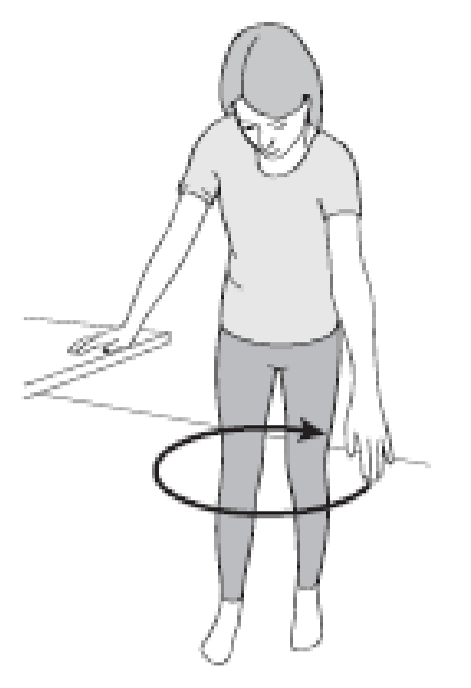
Let your affected arm hang straight down.
Swing your arm as if drawing a circle on the floor.
Change direction. Repeat 10 times.
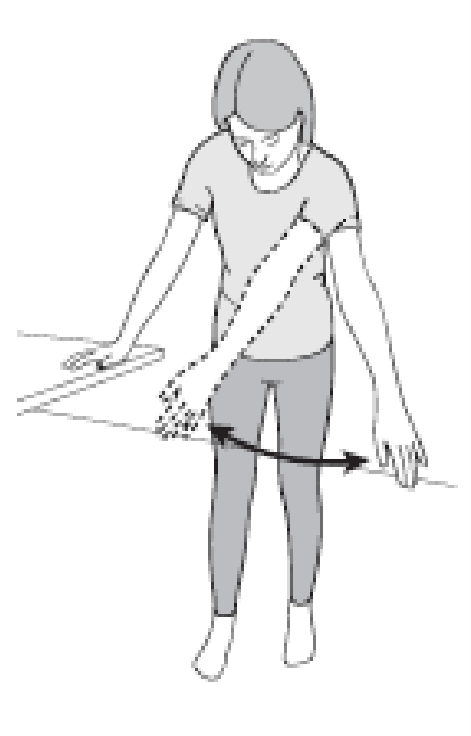
Let your other arm hang straight down.
Swing your arm to your left and then to your right.
Repeat 10 times.
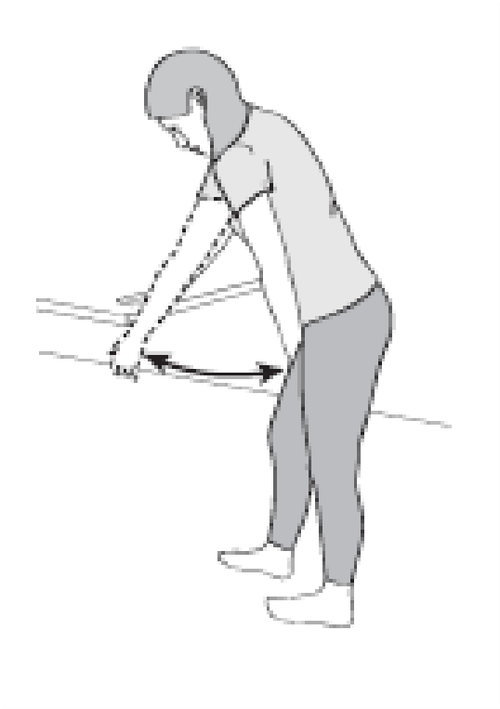
Let your arm hang straight down.
Swing your arm forwards and backwards.
Repeat 10 times.
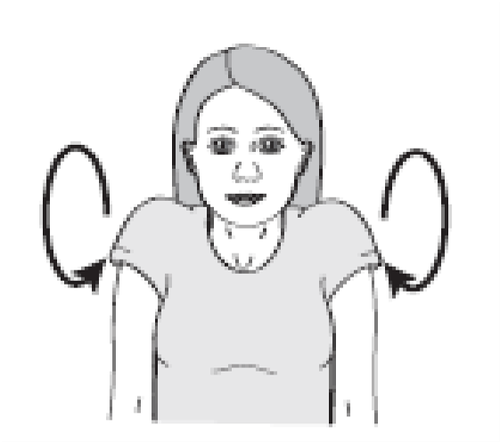
In a sitting or standing position roll your shoulders in both directions.
Repeat 10 times.
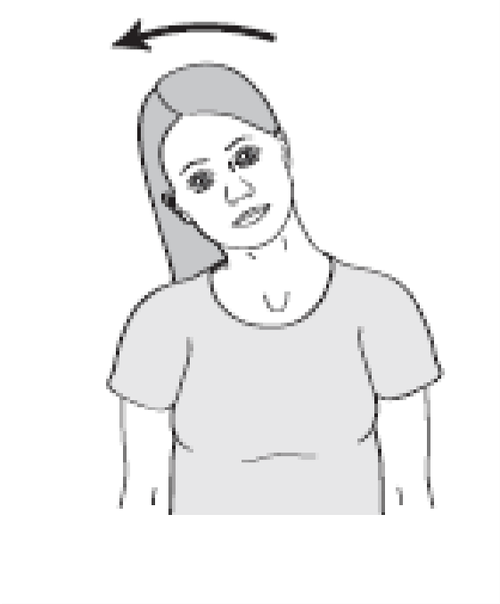
Tilt your head from side to side.
Repeat 10 times.
Contact information
Arrhythmia Specialist Nurses
Tel: 0300 422 8420
Monday to Friday, 9:00 am to 4:00 pm
Pacing appointments
Tel: 0300 422 6551
Monday to Friday, 09:00 am to 4:30 pm
Pacing department
Tel: 0300 422 8281
Monday to Friday, 9:00 am to 4:00 pm
Further information
Arrhythmia Alliance
Helpline: 01789 867 501
Website: www.heartrhythmalliance.org
British Heart Foundation
Heart Helpline: 0808 802 1234
Website: www.bhf.org.uk
The Cardiomyopathy Association
Tel: 0800 018 1024
Website: www.cardiomyopathy.org
Driving and Vehicle Licensing Agency (DVLA)
Tel: 0300 790 6806
Website: www.gov.uk/pacemakersand-driving
Gloucestershire Carers Hub
Tel: 0300 111 9000
Website: www.gloucestershirecarershub.co.uk
Email: carers@peopleplus.co.uk
Talking Therapies (Gloucestershire)
Tel: 0800 073 2200
Website: www.ghc.nhs.uk