We use cookies to provide you with a better service. Carry on browsing if you’re happy with this or read more about our cookie policy and privacy policy.
Purpose
Maggie began her nursing career in January 1975. Her colleagues organised a surprise celebration to mark her 50 years of service as an NHS nurse.
hasu hyper acute stroke
by Caroline Phelps
If your GP arranges for you to be seen by our Frailty team, they will usually ask for you to come to our Frailty SDEC (Same Day Emergency Care) at Gloucestershire Royal Hospital.
by Jyothsna Chennupati
Advice for patients, carers and visitors
by Sarah Simmons & Katy Murphy
The Trauma Unit at Gloucestershire Hospitals NHS Foundation Trust is part of the Severn Trauma Network, and helps to make sure that patients who have experienced an orthopaedic problem receive timely and co-ordinated treatment.
by Irene Stratton
Antimicrobial Stewardship is defined as "an organisational or healthcare system wide approach to promoting and monitoring judicious use of antimicrobials to preserve their future effectiveness."
This page gives you information about aftercare following your trans-nasal endoscopy.
NHS Stroke services Gloucestershire
This page provides you with advice about caring for your injured elbow. The most common type of bony injury to an elbow is known as a radial fracture. The radius is one of the long bones in your forearm. It is usually broken when you fall on an outstretched arm.
Vitamin D, Vitamin, cholecalciferol, ergocalciferol, 25OHD, 25(OH)D
Department of Haematology
HbA1c can be used as a diagnostic test for diabetes
Making sure that our patients are safe while in our care is one of our highest priorities.
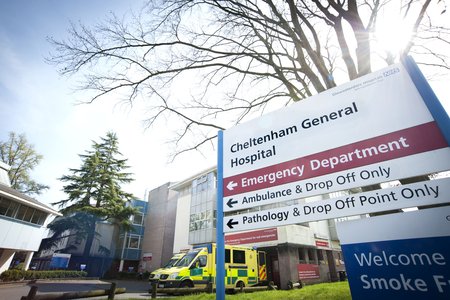
Cheltenham General and Gloucestershire Royal Hospitals have been awarded £39.5m of capital funding to modernise hospital buildings, transform services and deliver even better patient care.
The quality of laboratory investigations can depend not only on the quality of the specimen, but also on the quality of the information which we receive with the specimen. Inadequate information may lead to sample rejection, inappropriate testing or a delay in testing whilst further information is sought.