We use cookies to provide you with a better service. Carry on browsing if you’re happy with this or read more about our cookie policy and privacy policy.
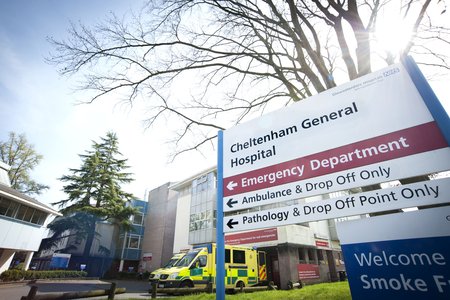
Changes to Cheltenham A&E during BMA Industrial Action 17 - 22 December
Your doctor has recommended a temporal artery biopsy. This page will explain: What temporal arteritis is Why you might need this test How the test is done What happens afterwards Please ask your doctor if you have any questions.
The most important indicator of bleeding risk is the patient history
This page gives you information about the care following your bronchoscopy.
The Gloucestershire health system undertook public consultation in 2020 and further engagement between 2022 and 2023 on shaping the future of our hospital services.
Due to essential works to replace hot water pipes, hot water will be unavailable throughout the main atrium block at Gloucestershire Royal Hospital, including the Children’s Centre, from 7:30am to 9pm on Sunday 29 September.
Department of microbiology.
Putting you in control of your follow-up care This page provides you with information about Patient Initiated Follow-Up appointments or PIFU for short, at Gloucestershire Hospitals NHS Foundation Trust. It explains what PIFU appointments are and how they work.
This page describes the laparoscopic (keyhole) operation to treat acid reflux and hiatus hernia. It explains the risks and benefits of surgery and the likely after effects. Dietary advice will be available from the ward before you are discharged.
This page gives you information about Photodynamic Therapy (PDT) for the age-related eye conditions macular degeneration and Central Serous Chorioretinopathy (CSCR). The aim of this page is to explain what to expect at all stages of the treatment and to answer some of the commonly asked questions.
This test is only performed following discussion with the Consultant Haematologist.
Your treatment starts as soon as you come into the emergency department (ED). On arrival, you will see a specialist emergency clinician called a triage nurse who will assess how serious your condition is. This allows patients with life-threatening problems to be seen first.
How to apply to volunteer at our Trust, including steps to apply, completing an online application form and submitting it.
This page gives you information about having a urinary flow rate test followed by an ultrasound bladder scan.
Adult
Everything you need to know about our on-site pharmacies.
If you have kidney disease you are likely to have anaemia, which is a drop in the amount of haemoglobin found in your bloodstream. Anaemia can make you feel very weak and tired. This page gives you information about anaemia, why it happens and what treatment is available to control it.
It has been agreed that the provision of X-ray services in Gloucestershire will be revised on an interim basis to ensure that the most specialist services can continue to be provided safely. The temporary changes are a response to the high levels of radiographer vacancies being experienced in Gloucestershire.
An independently chaired Engagement Hearing will be held in public on Thursday 24 October 2019 offering people an opportunity to share their ideas and views on developing urgent and specialist hospital care in Gloucestershire in the future.
This month's Board Meeting was held on the 24 March 2016, chaired by Professor Clair Chilvers in Gallery Room, Gloucestershire Royal Hospital.
This month's Board Meeting took place on the 12 July 2017, chaired by Peter Lachecki in the Lecture Hall, Redwood Education Centre, Gloucestershire Royal Hospital.