We use cookies to provide you with a better service. Carry on browsing if you’re happy with this or read more about our cookie policy and privacy policy.
Changes to Cheltenham A&E during BMA Industrial Action 17 - 22 December
This page gives you information about having a bone marrow biopsy, what the procedure involves and answers the frequently asked questions.
Wrist conditions involve disorders of the bones, joints, tendons, or nerves in the wrist, commonly causing pain, stiffness, or impaired movement
ReSPECT is a national patient held document, completed following an Advance Care Planning conversation between a patient and a healthcare professional.
As with most tumour markers there is a high incidence of false positive and false negative results; HCG is most appropriately used in monitoring disease progression or effectiveness of treatment once diagnosis of the tumour has been made and serum concentrations have been shown to be high prior to treatment.
The medical team in the RAPU will ensure that you are assessed, investigated, diagnosed and treated on the same day. This will allow you to return home without the need for hospital admission. In some cases, you may be asked to return for a followup appointment at RAPU or with your consultant in clinic.
This page answers some of the questions you may have about your humerus fracture. It also gives you advice and information about how to manage at home. The humerus is the bone in the arm between your shoulder and elbow. Your injury is a fracture to this bone, near the shoulder. There is often quite a lot of bruising and swelling of the arm over the first few weeks. This is normal and resolves by itself as the fracture heals.
You have been referred for a tunnelled line, sometimes referred to as a catheter. This page aims to answer some of the questions you may have and explains how this line is different to other cannula or lines you may have had before. Also included is information about the risks and benefits of having Tunnelled Central Venous Catherter (CVC) and what to do if you have any problems. Please contact the team who provide your care if you need any further information about anything on this page.
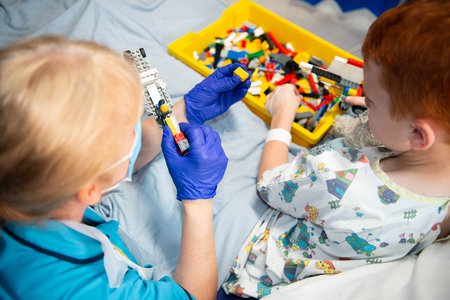
In Play in Hospital Week, find out what our Play Specialists do in a typical day
This industrial action by Resident Doctors, led by the British Medical Association (BMA), will take place from Friday 14 November (7am) to Wednesday 19 November (7am)
This page gives you information about bladder urgency and how to improve bladder function with retraining and other treatment methods. Bladder urgency is having the sudden urge to hurry to pass urine, often with the fear of not getting to the toilet in time. People with bladder urgency can find that they frequently have to pass urine in the daytime and sometimes at night. Bladder control can be lost and an embarrassing leak of urine might happen. Studies have shown that bladder urgency is a common problem but, with the right assessment, treatment can work very well.
EDTA blood. (No patient preparation or special handling required).
This information on this page is for patients and their family to help them understand the important things about having treatment of an Abdominal Aortic Aneurysm (AAA).
Your doctor has advised you to have your blood pressure monitored over 24 hours. This page gives you information about what the test will involve.
This page gives you information about the main pain relief options available after major surgery. You will probably only need this pain relief for the first few days following surgery. Pain is to be expected after surgery and poor pain relief can increase the risk of complications. Our aim is to make sure that you receive the best possible pain relief. Good pain relief is a high priority, the benefits are: • It can help you to get better. • Your overall experience will be much better. • It can shorten the length of your hospital stay. • It can reduce your risk of complications such as developing a chest infection.
This page gives you advice and information about Prostap® or Zoladex® treatment for non-cancerous gynaecological conditions such as fibroids, endometriosis and severe Premenstrual Syndrome (PMS) or Premenstrual Dysphoric Disorder (PMDD). Please see below for explanations of these conditions.
In line with Government guidance, the NHS in Gloucestershire is asking hospital outpatients and visitors (who are not affected by current visiting restrictions) to plan ahead and have face coverings available for when they attend hospital from 15 June.
No specific preparation required
Fatigue is the feeling of having no energy and is a common side effect. Resting and sleeping may not help improve fatigue.
Sign up to the ultimate challenge to help transform cancer care
This page is designed to help people who are bereaved when a death occurs in the hospital. It explains procedures such as registering a death and arranging a funeral.