We use cookies to provide you with a better service. Carry on browsing if you’re happy with this or read more about our cookie policy and privacy policy.
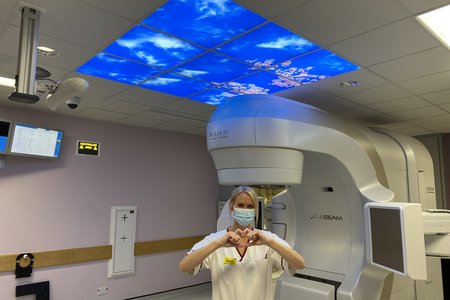
These innovative sky ceilings are decorated with bright pictures of outdoor scenes such as trees to add a calming feeling to treatment rooms.
This page will give you information about your recovery following the implant of a Permanent Pacemaker (PPM) and it should be read in addition to the information you have already received.
Our cancer services team have created a short series of videos to help you understand how to manage fatigue as a side effect from your cancer diagnosis or treatment.
This page gives you information about cochlear implants, how they work and who is eligible to have one fitted.
This page gives you information about your recovery following the insertion of an Implantable Cardioverter Defibrillator (ICD) and it should be read in addition to the information you have already received.
This page includes important information for you to read before your admission
Our hospitals are extremely busy at present and we are strongly urging people to only call 999 or visit the two Emergency Departments if it’s a life-threatening situation or a serious injury
World Hepatitis Day takes place on 28 July and is an opportunity to highlight the importance of early testing and treatment for viral hepatitis.
Friday 22 September 2023 saw the official opening of An Underwater Adventure, a large-scale public mural at the Children’s Centre at Gloucestershire Royal Hospital
There's a new way to book your first midwife appointment in Gloucestershire
Your donations help to fund specialist care, state-of-the-art equipment and ground-breaking research at the Gloucestershire Oncology Centre
by Jim Moriarty
The crossmatch is defined as a procedure to exclude incompatibility between donor red cells and the patient’s plasma
Chemical Pathology
The Care Quality Commission (CQC) published results of its national maternity survey on Friday 9 February.
From 9 to 15 October, we are joining people across the country to mark Baby Loss Awareness Week. This is a time to remember babies who have died during pregnancy, at birth or in infancy and to offer support to anyone affected.
You may have your treatment given to you:
Your doctor has recommended that you consider having Radioactive Iodine Therapy (RAI) for the treatment of your overactive thyroid gland. This page gives you information about the treatment. When you attend the department for the treatment, you will be given more information and you will be able to ask any questions that you may have.