We use cookies to provide you with a better service. Carry on browsing if you’re happy with this or read more about our cookie policy and privacy policy.
Enhanced recovery after surgery (ERAS) is a multidisciplinary approach to help people recover more quickly after major surgery. It’s sometimes called rapid or accelerated recovery.
by Richard Sidebottom
A Medical Ophthalmologist from Gloucestershire Hospitals NHS Foundation Trust has been named as a finalist at the prestigious Royal College of Physicians’ (RCP) Excellence in Patient Care Awards.
This page will explain what will happen after your injection treatment and how to contact us about your progress.
by Caroline Agg
I chose nursing as my career because I have always enjoyed helping people to have the best quality of life. My passion also is about providing exceptional care to the vulnerable to support their recovery and nursing allows me to achieve this holistically .
This page gives you information about receiving propofol sedation while having your endoscopic procedure. You will be given separate information about the procedure you are having, including details of any preparation needed.
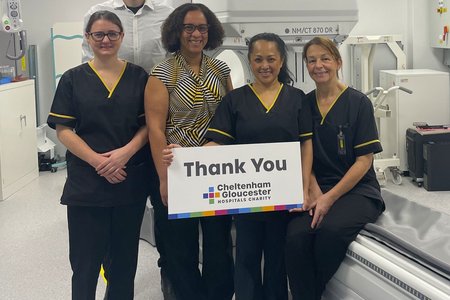
The state-of-the-art equipment is now in it's new home at Gloucestershire Royal Hospital.
Wide awake, local anaesthesia, no tourniquet (WALANT) surgery is a technique used to treat many hand and wrist conditions.
From sharing your thoughts and ideas to influencing the way we provide hospital services, from electing our governors to becoming a governor yourself – there are many ways you can help us as a member.
A multidisciplinary team (MDT) will support you by bringing together different healthcare professionals to provide coordinated, personalised care and support throughout your diagnosis, treatment and beyond.
This page will help to answer some of the commonly asked questions about female sterilisation; including information about your hospital stay, the operation and what to expect after your discharge home.
As part of healthcare science week, Gloucestershire Hospitals is running a virtual Q&A, to showcase and celebrate the vital work of healthcare science and allied health professionals in our Trust.
by Alli Patchett
by Lowri Bowen
Your doctor has recommended that you consider having Radioactive Iodine Therapy (RAI) for the treatment of your overactive thyroid gland. This page gives you information about the treatment. When you attend the department for the treatment, you will be given more information and you will be able to ask any questions that you may have.
Your oncologist has recommended that you have a course of radiotherapy. This page aims to tell you about radiotherapy and what will happen. Please be aware that radiotherapy centres are training areas for doctors, nurses and radiographers. Students may be present in the department but they are supervised at all times. If you would prefer not to have students present during your treatment, please let a member of staff know. You may find it useful to write down some questions before you start your treatment. A space is provided towards the end of this page for you to do so.
This Christmas Eve marks a fresh chapter for Cheltenham General Hospital’s Medical Day Unit (MDU), as it opens in its new home on Oakley Ward, Centre Block, after relocating from its previous site near A&E.
About our Pathology service, work experience opportunities we offer and details of how to tour our laboratories.
The NHS in Gloucestershire is urging the public to only call 999 or attend the Emergency Departments in Gloucester or Cheltenham if it’s a life threatening condition or serious injury.