We use cookies to provide you with a better service. Carry on browsing if you’re happy with this or read more about our cookie policy and privacy policy.
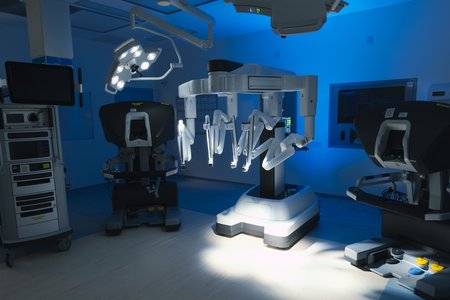
Gloucestershire Hospitals reaches a significant milestone this year as it celebrates a decade of groundbreaking advancements in the field of robotic urological surgery, which has helped revolutionise the landscape of healthcare. Over the past 10 years, the Trust has established itself as a pioneering hub for robotic-assisted surgeries.
The doctors looking after you/your family member are considering performing a tracheostomy. This is to help with your overall treatment while you are a patient in the Department of Critical Care (DCC). We have written this page to give you information about having a tracheostomy. It explains what a tracheostomy is, what the procedure involves and the possible risks. We hope that it will help to answer some of the questions you may have. If you have any further questions or concerns, please speak to a member of the Critical Care team.
This page provides information for renal patients with a fistula or graft who need a fistulogram or fistuloplasty. The page answers some of the commonly asked questions about having a fistulogram or fistuloplasty. It also explains the benefits, risks and alternatives to the procedure.
We're working in partnership with Gloucestershire Libraries to promote free digital library services, including thousands of eBooks, eAudiobooks, eMagazines and eNewspapers that can be enjoyed via your smart phone, tablet, or laptop.
This page gives you information about the care you will need following a thoracoscopy.
Miscarriage can have a major emotional effect on individuals, couples and their families. Feelings of loss, grief or a sense of failure can sadly be common. When miscarriage happens 3 or more times, it is called recurrent miscarriage or recurrent pregnancy loss. This affects around 1 in every 100 couples. We are sorry that you have experienced recurrent pregnancy loss and hope that this page will give you some information and signpost you to further support to help during difficult times.
The ‘End PJ paralysis’ campaign aims to help patients to become active in their recovery, keep their independence and help improve mental wellbeing and dignity.
Our Trust has 13 public governors who represent the views of their local communities in their respective constituencies.
This page explains what a molar pregnancy is, how it is diagnosed and how it is treated. It also answers the frequently asked questions.
After you’ve looked after those closest to you, you can help transform the lives of future patients
An injury to the scapholunate ligament is a very serious injury to the wrist joint.
Giving in memory of a loved one lets you celebrate their life whilst also making a lasting difference to the lives of future patients
by Matthew Crockett
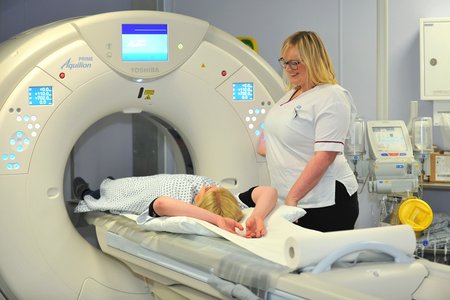
This page gives you information about having a Computed Tomography (CT) scan of the head or sinuses. It explains how the procedure is carried out and some of the possible risks.
This page gives you information about having a Computed Tomography (CT) guided bone biopsy. It explains how the procedure is carried out and some of the possible complications.
Head and neck cancers can affect areas such as the mouth, throat, voice box, nose, and salivary glands.
Non- Gynae Cytopathology
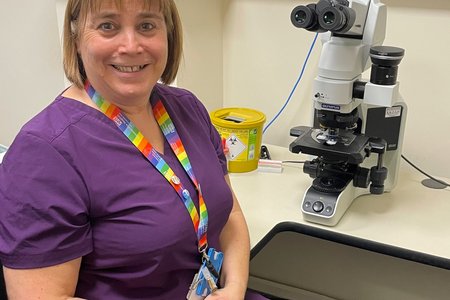
Thanks to our generous supporters, a new high-tech haematology microscope has been funded to support local cancer patients.
This page gives you information about having a CT colonoscopy, how the test is done, the risks involved and what to expect. A CT colonoscopy is also known as a virtual colonoscopy.