We use cookies to provide you with a better service. Carry on browsing if you’re happy with this or read more about our cookie policy and privacy policy.
You have been referred this page because your surgeon has decided that your gallbladder needs to be removed. The most common reason for this is because you have gallstones.
This page provides advice for when you go home after having gynaecological surgery
Feeding is so much more than just provision of nutrients, it will help build relationship with your baby and help you learn their communication cues.
We want to update patients, families and carers on the ongoing temporary closure of our Pharmacy Manufacturing Unit (PMU) at Cheltenham General Hospital and what this means for patients receiving SACT at our hospitals.
Help us build a bigger, brighter home for cancer care - for you, your loved ones, your community.
This page explains what psychological support is available for kidney patients. If you have any questions, please speak to a member of the renal team or contact the psychology team on the phone number at the end of this page.
The information on this page is about skin conditions which affect the vulval skin. These skin conditions are not cancer but in some women the cells over time can become cancerous. This is why they are called “pre-malignant conditions”.
The Care Quality Commission (CQC) has published its delayed report on maternity services at Gloucestershire Royal Hospital (GRH) following an unannounced inspection in March 2024.
In response to the current coronavirus (COVID-19) outbreak, the NHS in Gloucestershire has taken a number of temporary measures to help ensure it can continue to provide safe patient care.
The endoscopy unit at Cheltenham General Hospital provides care for patients undergoing a variety of endoscopic procedures (an examination inside your body using a small camera).
The Blood Bank laboratory needs to be informed of any suspected transfusion reaction as soon as possible.
by Alison Lovett-Turner
This page describes the treatment options available for men with azoospermia or severe oligospermia. ‘Azoospermia’ and severe ‘oligospermia’ are the words to describe an absence of sperm or very few sperms in the ejaculate. Various factors can contribute towards these conditions, some of which may be inherited.
The COVID-19 pandemic has impacted on patient care, particularly waiting times for planned operations, procedures, diagnostic tests and appointments. Good progress is being made in tackling these waiting times.
This page gives you information about immunotherapy treatment for bladder cancer, including its risks, benefits and alternative treatments.
This page gives you information about having an apicectomy and answers many of the commonly asked questions. If you have any further questions or would like a further explanation, please contact the Oral and Maxillofacial department using the contact information at the end of this page.
This page has been written so that you will have the names and contact details for the Gynaecological Cancer Care team. We have also included some other resources that you might find useful.
Our Chief Executive has been named one of the top 50 CEOs in the NHS in The Health Service Journal.
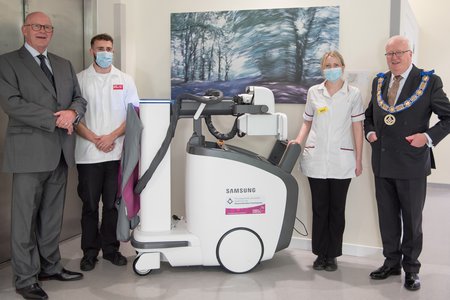
The latest X-ray machine has been donated by the Provincial Grand Lodge of Gloucestershire Freemasons whose members raised the £100,000 needed in a matter of months.
Health and care organisations in Gloucestershire continue to work together in making patients and their families more aware of the benefits of recovering at home, just as soon as they are well enough to leave hospital.