We use cookies to provide you with a better service. Carry on browsing if you’re happy with this or read more about our cookie policy and privacy policy.
This page gives you information about the therapists working within the Gloucestershire Brain Injury Team and how they help people to achieve their best possible recovery.
Department of Haematology
This page has been written to help you understand more about seborrheic dermatitis (eczema of the scalp). It gives you information about its causes and provides useful hints and tips about hair care that will allow you to manage this condition. Finding the right hair care routine, products and style is key to managing your eczema effectively.
Gloucestershire Hospitals has approved clear face masks, to help health and care workers to communicate with people with conditions such as hearing loss, autism and dementia throughout the pandemic.
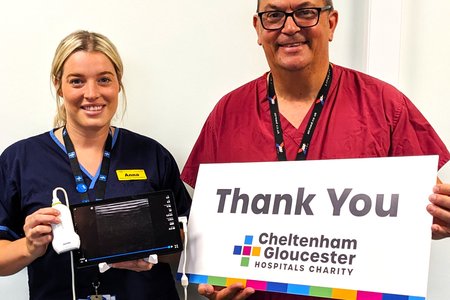
Local patients are now benefitting from the ‘VScan Air’ Wireless Ultrasound to help provide faster and more accurate treatment at our hospitals.
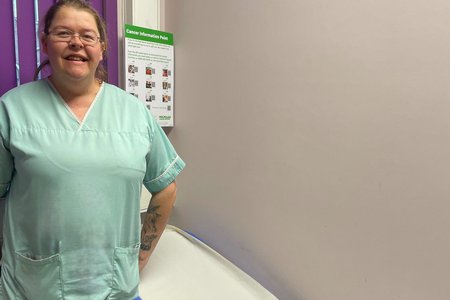
Thanks to your kind donations, eight new electric haematology treatment couches have been funded to help improve the patient and staff experience at our hospitals.
This is an exciting opportunity to make a difference to our patients this winter.
Deficiency of the enzyme alpha-galactosidase, results in Fabry's disease, an X-linked, recessive, lysosomal storage disease, also known as Anderson-Fabry disease.
ESR tube (Trisodium Citrate)
This page gives you information about what to expect when leaving the Emergency Department after having had sedation. You have been given a sedative medication to assist with your procedure. You may experience a short period of memory loss during the time the sedation is effective. This medication may also impair your judgment for up to 24 hours. Sedation is safe with very few side effects but most patients have feelings of tiredness afterwards. Some people may believe they are fine and unaffected by the medication but their reactions will be slower. This is similar to how some people may feel after having alcohol.
In addition to fractures, certain paediatric conditions may require the support of our Plaster Room services.
I have worked my way up from a Band 5 nurse on Neurology, Trauma & Orthopaedics to a Band 6 on Neurology, Dermatology & Rheumatology, then a Band 7 on Care of the Elderly before becoming the Matron on COTE & FAU. I was delighted to be the first Filipino matron at Gloucestershire Royal Hospital!
This page gives you information on care following banding of piles (haemorrhoids).
This page aims to provide you with information following your ankle injury. You have a soft tissue injury which usually causes pain, swelling, bruising and some restriction of movement.
Putting you in control of your follow-up care This page provides you with information about Patient Initiated Follow-Up appointments or PIFU for short, at Gloucestershire Hospitals NHS Foundation Trust. It explains what PIFU appointments are and how they work.
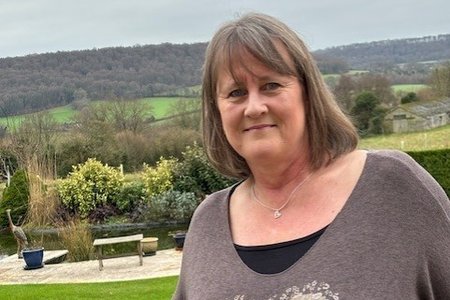
Women in a Gloucestershire village whose lives have all been touched by cancer have joined together to get behind the £17.5m Big Space Cancer Appeal.
Opiate bioavailability and response are highly variable. Wide inter-patient variation exists.
Information for Oncology and Haematology patients This page explains what an extravasation is and how to care for your skin should this happen.