We use cookies to provide you with a better service. Carry on browsing if you’re happy with this or read more about our cookie policy and privacy policy.
BMA Resident Doctors’ Industrial action – 7 April to 13 April and temporary changes to Cheltenham A&E
Oxalate is measured as part of the investigation of the underlying cause of renal stone disease, either primary (endogenous oxalate overproduction due to an inherited enzyme deficiency), or secondary (e.g. due to excessive intake of oxalate or its precursors, or due to gastrointestinal disease associated with fat malabsorption).
The information given here is intended for use by healthcare professionals. Please see Lab Tests Online-UK for more general advice, links and background.
To learn more about LDH visit Lab Tests Online
Mr Mutimer is an orthopaedic surgeon with a specialist interest in hip and knee arthroplasty.
Ranges and interpretation reported as provided by referral laboratory.
Focusing on health, information and choice in maternity care
Due to essential works to replace hot water pipes, hot water will be unavailable throughout the main atrium block at Gloucestershire Royal Hospital, including the Children’s Centre, from 7:30am to 9pm on Sunday 29 September.
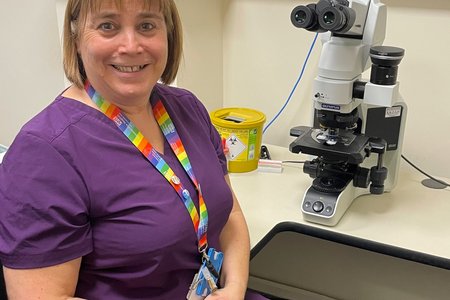
Thanks to our generous supporters, a new high-tech haematology microscope has been funded to support local cancer patients.
Department of microbiology.
by Allysun Gore
Local patients are now benefitting from the ‘VScan Air’ Wireless Ultrasound to help provide faster and more accurate treatment at our hospitals.
Thanks to your kind donations, eight new electric haematology treatment couches have been funded to help improve the patient and staff experience at our hospitals.
Gloucestershire Hospitals has approved clear face masks, to help health and care workers to communicate with people with conditions such as hearing loss, autism and dementia throughout the pandemic.
This is an exciting opportunity to make a difference to our patients this winter.
This page gives you information about what to expect when leaving the Emergency Department after having had sedation. You have been given a sedative medication to assist with your procedure. You may experience a short period of memory loss during the time the sedation is effective. This medication may also impair your judgment for up to 24 hours. Sedation is safe with very few side effects but most patients have feelings of tiredness afterwards. Some people may believe they are fine and unaffected by the medication but their reactions will be slower. This is similar to how some people may feel after having alcohol.
Deficiency of the enzyme alpha-galactosidase, results in Fabry's disease, an X-linked, recessive, lysosomal storage disease, also known as Anderson-Fabry disease.