Gestational Diabetes Mellitus (GDM)
Diabetes and pregnancy Read this page if you have been diagnosed with Gestational Diabetes Mellitus (GDM). This page explains what GDM is, how it is treated and how it may affect your pregnancy.
On this page
-
What is GDM?
-
Who is at risk of developing GDM?
-
How is GDM diagnosed?
-
Testing your blood glucose levels
-
Treatment for GDM
-
What effects will GDM have for me and my baby?
-
Is there a risk of developing diabetes outside of pregnancy?
-
What can I eat?
-
Food safety
-
Managing your weight
-
Physical activity and exercise
-
Contact information
What is GDM?
GDM is a type of diabetes that occurs during pregnancy, usually during the second or third trimester.
Pregnancy causes various hormonal changes in your body which affect the way your body uses insulin (the hormone which lowers your blood glucose). These changes make it more difficult to control blood glucose levels.
There is more information on this page, however, if you are ever concerned or have questions about GDM, you can contact the diabetes team, using the contact details at the end of the page.
Who is at risk of developing GDM?
There are certain risk factors that may make some women more likely to develop GDM. These include:
- A previous pregnancy with GDM
- First degree relative (parent or sibling) with diabetes (type 1 or type 2)
- Polycystic ovarian syndrome (PCOS)
- Obesity (BMI greater than 30kg/m2)
- Previous weight loss surgery (regardless of current BMI)
- Raised Inhibin A on QUAD test
- Large baby on scan (Estimated weight and/or AC >95th centile)
- Previous large baby (birth weight greater than 4.5kg)
- Previous unexplained stillbirth or neonatal death
- Ethnicity - Afro-Caribbean, South East Asian and Middle Eastern ethnic groups of women are more likely to develop GDM.
How is GDM diagnosed?
Women with one or more of the above risk factors will be offered an oral glucose tolerance test (OGTT) at around 24 weeks into their pregnancy. This is a fasting blood test followed by the consumption of a glucose drink and a further blood test 2 hours later.
In some cases, an OGTT may not be suitable, and some people will be asked to test their blood glucose at home. You will be advised if this would be more suitable for you.
Testing your blood glucose levels
Once you have been diagnosed with GDM it is important to regularly test your blood glucose levels. You will be taught how to do this by a member of the diabetes team. You will also be invited to a group education session to discuss GDM and your pregnancy. If a group session is not suitable for you, please inform your midwife or contact the Diabetes team.
The targets (as per NICE guidelines) for your blood glucose levels during pregnancy are:
- fasting below 5.3mmol/L
- 1 hour after meals below 7.8mmol/L
- 2 hours after meals below 6.4mmol/L
The following advice applies, unless you are told otherwise by your diabetes team:
Please test your fasting (before you eat or drink anything) and 1 hour after meal blood glucose level each day, until the end of your pregnancy.
If you are treating your GDM with insulin injections, you may need to test more frequently; a member of the diabetes team will advise you if this is required.
Treatment for GDM
We will help support you to keep your blood glucose levels within the pregnancy target range, advising appropriate dietary changes and encouraging you to remain active where possible. Dietitians work as part of our team and can provide additional input at any time during your pregnancy.
In some cases, you may need additional help from medication to help lower your blood glucose. A member of the diabetes team will discuss your options with you. We may offer Metformin and/or insulin, and we will provide further written and verbal information should you require these treatments. Both are considered safe in pregnancy.
What effects will GDM have for me and my baby?
Most women with GDM go on to have a healthy pregnancy and healthy baby. However, if your blood glucose levels are consistently raised above the pregnancy target ranges, there is an increased chance of complications such as:
- Baby being bigger than average (macrosomia)
- Shoulder dystocia (where your baby’s shoulder gets stuck during vaginal birth)
- Premature birth (giving birth before the 37th week of pregnancy)
- Polyhydramnios (too much fluid around the baby, in the womb)
- Stillbirth or the baby dying at or around the time of birth (however, this remains uncommon)
- Baby needing additional care once they are born, possibly in a neonatal unit
- Your baby developing low blood sugar or yellowing of the skin and eyes (jaundice) after they are born, which may require treatment in hospital
- Being at greater risk of developing obesity and/or type 2 diabetes later in the baby’s life
- You have an increased chance of developing preeclampsia (a condition affecting your blood pressure, which can lead to complications if not treated)
- Increased chance of tears requiring repair during the birth (if your baby is bigger than average)
- Higher chance of having GDM again in future pregnancies
- You have an increased risk of developing type 2 diabetes in the future
You may be recommended to have an induced labour or caesarean section; you can discuss this with your Obstetrician or midwife at your pregnancy appointments. You can reduce the chance of these complications by maintaining your blood glucose within the recommended pregnancy target ranges, with support from the Diabetes team and your Midwife and Obstetrician. You will be offered additional appointments with your Obstetrician and can discuss your options for timing and mode of birth at this time.
Is there a risk of developing diabetes outside of pregnancy?
In most cases, GDM resolves after the birth of your baby. This means you can stop testing your blood glucose at home and you can stop taking any medication (if you started them in pregnancy). However, you are at increased risk of developing type 2 diabetes for the rest of your life.
Women with GDM have a 50% risk of developing type 2 diabetes in the 5 years after having their baby, but the background increased risk remains for the rest of your life.
You can reduce the risk by:
- being physically active
- maintaining a healthy weight (recommended BMI
18.5kg/m2 to 25kg/m2)
- eating a healthy, balanced diet
- breastfeeding
It is also advised that you have a blood test with your GP at around 13 weeks after birth. This is called a HbA1c, and tests for type 2 diabetes. After this, you are advised to have a repeat HbA1c every year.
You may need to contact your GP’s surgery and remind them that you need this blood test.
If you are diagnosed with type 2 diabetes you will be treated in the community by your practice nurse and GP. In future pregnancies, there is a high chance of GDM developing again. Please let your midwife know if you had GDM in any previous pregnancies and they can make a referral to the diabetes team.
What can I eat?
If you have GDM, it is important to eat a balanced diet and continue to be physically active.
The foods which will have the most impact on your blood glucose levels are called carbohydrates. There are two different types of carbohydrates.
Sugary carbohydrates can raise your blood glucose levels very quickly. Although you do not need to remove every trace of sugar from your diet, you do need to make sure that it is low in sugar.
Try to avoid the following sugary carbohydrates:
- sugary soft drinks including fizzy drinks, fruit juice and fruit smoothies
- avoid adding sugar or syrups to tea and coffee
- avoid all sweets such as jellybeans, jelly babies or boiled sweets
As an alternative, you can drink low sugar/low calorie/diet soft drinks or no added sugar drinks. If needed, you can use sweeteners in drinks and on cereal instead of sugar. It is recommended to limit chocolate, cakes, biscuits and sugary puddings to smaller portions and less often.
Starchy carbohydrates such as bread, potato, pasta, rice and breakfast cereals also raise blood glucose levels. Whilst you should aim to have a starchy carbohydrate with your meals, you may need to eat these foods in smaller quantities. As a guide, try to aim for no more than a fist sized portion, or a quarter of your plate. This is about 30 to 45 grams of starchy carbohydrate at each meal. It is also recommended to choose wholegrain versions of starchy carbohydrates, as these raise glucose levels slightly slower than refined starches (white versions).
There are some natural sugars in fruit which will also affect your blood glucose levels. It is important to continue to include fruit in your diet, but it is advised to spread your intake throughout the day. Aim for only one portion of fruit (a portion fits in the palm of your hand or is 80g) at a time.
It is recommended to have 2 to 3 portions of dairy a day as it contains calcium. However, milk also contains a small amount of natural sugars. You may need to reduce your portion size of these foods. Yoghurt and cheese are usually less likely to affect your blood glucose levels than milk.
A portion of dairy is classed as:
- one glass of milk (200ml)
- one small plain, Greek or natural yogurt (150g)
- matchbox sized medium fat cheese (30g)
- half a matchbox sized high fat cheese (20g)
- 2 small matchbox sized ‘light’ cheese (80g)
- large pot of cottage cheese (200g)
Food safety
Please continue to follow all food safety guidelines recommended during pregnancy by the NHS and Food Standards Agency.
Managing your weight
This depends on your weight before pregnancy.
There are currently no specific UK guidelines regarding weight gain in pregnancy. Most pregnant women gain between 10 to 12.5kg (1 stone 2lb to 1 stone 8lb).
If your BMI was more than 30kg/m2 before you became pregnant, it is important to aim for a smaller amount of weight gain during pregnancy. If your BMI was more than 35kg/m2 you should try to avoid any weight gain at all. Small changes and increasing physical exercise may help you to avoid gaining too much weight. Excessive weight gain in pregnancy can make it more difficult for you to manage your blood glucose levels.
Physical activity and exercise
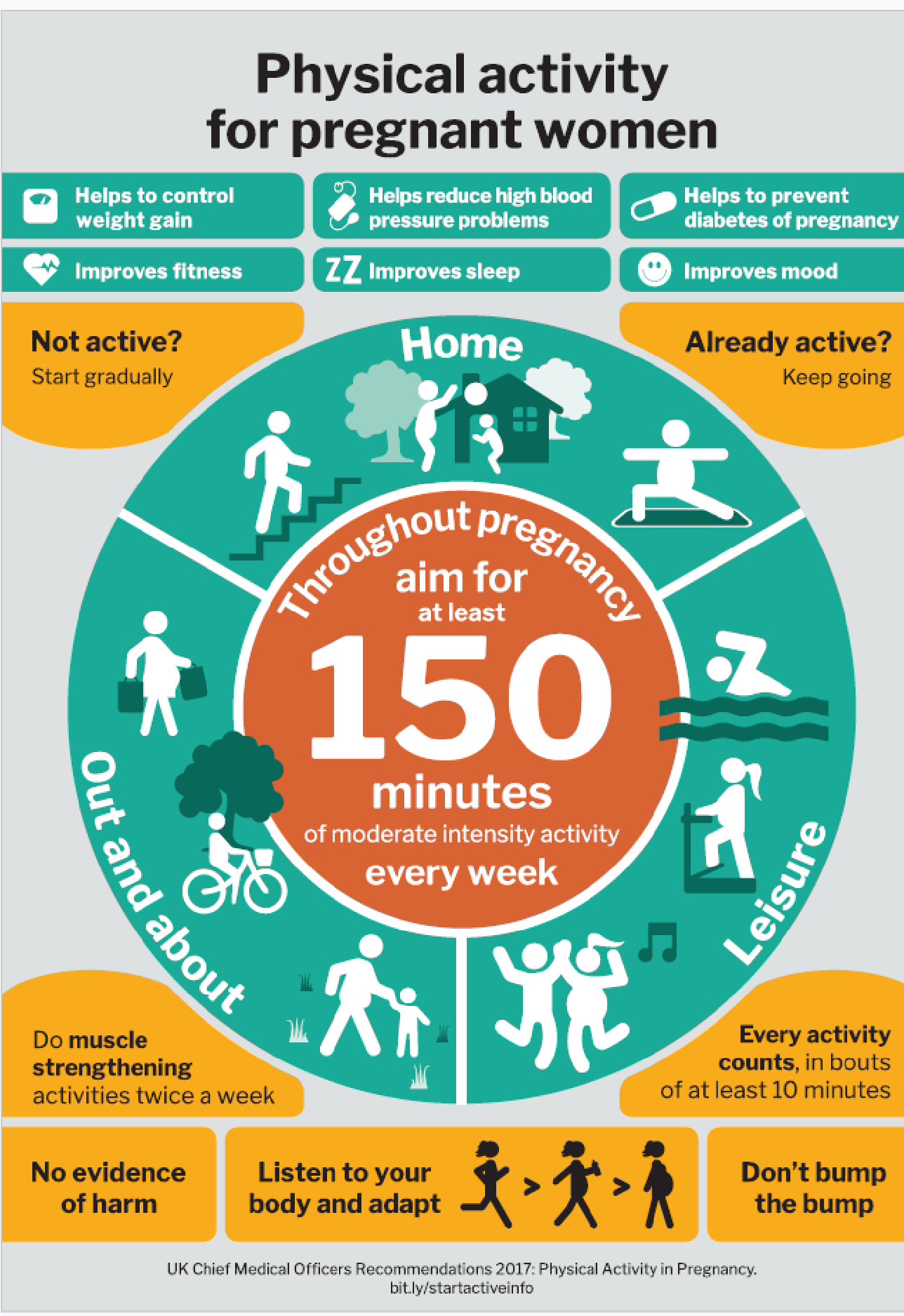
There are many benefits of remaining physical activity during pregnancy (see infographic below). There is good evidence showing that movement helps to lower blood glucose levels. We suggest adding in a 10–20-minute walk after your main meal of the day (within an hour after eating).
It is recommended to continue with your normal daily physical activity or exercise as long as you feel comfortable (unless advised to stop by your healthcare team). If you were not active before you became pregnant, you may need to start gentler exercise (such as walking, yoga or swimming) and gradually increase as your strength and stamina build. It is not advised to suddenly take up strenuous exercise. If you are not sure, please discuss this with your Midwife or Obstetrician.
Contact information
If you have any questions or concerns, please contact:
The Diabetes Hospital Team
Tel: 0300 422 8613 (answer phone)
Email: ghn-tr.diabetespregnancy@nhs.net
Please leave a message with your details and your call will be returned within 24 hours or after the weekend if the message is left late on a Friday afternoon.
You may also use ‘request a call back’ option on the GDM Health app (if you are using this). We aim to return your call within 24 hours Monday-Friday.
Please leave a message with your details and your call will be returned within 24 hours or after the weekend if the message is left late on a Friday afternoon.