We use cookies to provide you with a better service. Carry on browsing if you’re happy with this or read more about our cookie policy and privacy policy.
We have the care and dignity of your loved one at the very heart of our practice. We work closely with the bereavement and chaplaincy teams to support you and your family during what can be a very difficult time.
This new webinar series is intended to support and inform patients affected by cancer, as well as their families and friends
A team of local hospital staff, led by their Chief Executive Deborah Lee, will face up to an epic army challenge on Exmoor this weekend to raise vital funds for local cancer patients.
Hereditary haemochromatosis (HH) is a very common inherited disorder of iron metabolism, characterised by inappropriately high absorption of iron, leading to excessive storage in the liver, skin, pancreas, heart, joints and testes.
by Donna Little
by Jonathan Brown
We have an inclusion network which is open for all staff to join.
This report aims not only to comply with the requirements of the Equality Act 2010 but also to highlight good practices and identify gaps in both service provision and staff support. It captures data required under the general duty and showcases our ongoing Equality, Diversity and Inclusion (EDI) initiatives.
This page provides information about major head and neck surgery including the risks involved and what to expect when you go home.
The information on this page is for patients having a bladder tumour removed by a Trans Urethral Resection of Bladder Tumour (TURBT) operation.
Dr Ali is a Consultant Rheumatologist with experience across all aspects of rheumatology. She has a particular interest in connective tissue diseases, including Sjögren’s disease and systemic lupus erythematosus, as well as adolescent rheumatology.
This page gives you information about having a Computed Tomography (CT) guided lung/pleural biopsy. It explains how the procedure is carried out and some of the possible complications.
This page has been written to give you information about a medicine called magnesium sulphate. Magnesium sulphate (MgS04) is a medicine offered to women whose baby will be born between 24 and 30 weeks of pregnancy. This is because we know that it can protect some babies from developing cerebral palsy. You will have been referred this page to read because either a decision has been made by the doctor that your baby needs to be born early, or you have gone into premature labour and it is believed that having the magnesium sulphate would be of benefit to you and your unborn baby.
This page has been given to you to help answer some of the questions you may have about your polycystic ovarian syndrome (PCOS) diagnosis.
The information on this page is about skin conditions which affect the vulval skin. These skin conditions are not cancer but in some women the cells over time can become cancerous. This is why they are called “pre-malignant conditions”.
This page provides advice for when you go home after having gynaecological surgery
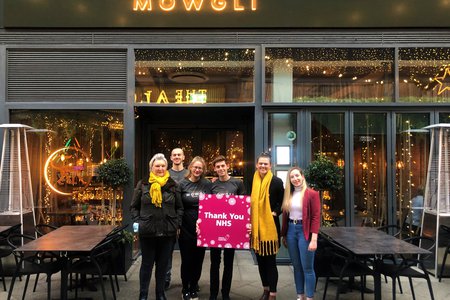
Mowgli, who recently opened their doors at The Brewery Quarter, have raised thousands of pounds for the Gloucestershire Oncology Centre in just a few short months.
Catheter urine samples are only routinely processed in the following circumstances:
The perineal clinic is a specialised clinic for women who require follow up for perineal or pelvic floor problems following childbirth.