We use cookies to provide you with a better service. Carry on browsing if you’re happy with this or read more about our cookie policy and privacy policy.
This page has been given to you because you have injured your shoulder. An X-ray suggests that you have fractured your clavicle (sometimes known as your collar bone) or injured your acromioclavicular (AC) joint. The AC joint is where your clavicle meets your shoulder.
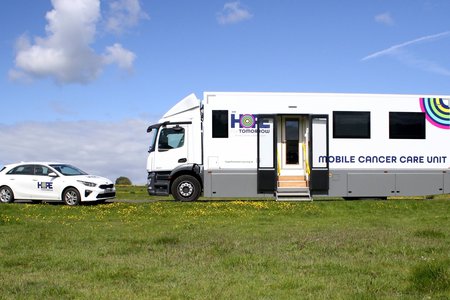
Gloria Hunniford is heading up a campaign to promote the delivery of localised NHS cancer treatment with the use of mobile cancer care units.
Find out everything you need to know about parking exemptions and permits.
All of us suffer pain at some time in our lives but our experiences of pain are very individual. Here at the Gloucestershire and Herefordshire Pain Management Service we try to tailor your treatment to your experience of pain. We want to support you to live as well as you possibly can.
This page gives you information about the Anti Mullerian Hormone assessment, why you might need it and the cost.
by Michelle Sterry, Kate Adamson, Trine Jorgensen, Jo Daubeney
A perilunate dislocation is a severe injury to the ligaments of the wrist which results in dislocation of the wrist around the lunate bone.
If you're thinking of returning to the HCPC register, there is help, support and information to allow you to Return to Practice.
You have been advised to have a flexible sigmoidoscopy to help investigate the cause of your symptoms. It is important that you read this page before you have the procedure so that you understand what will happen and the preparation involved.
This page has been designed to help you exercise your sphincter muscles. Sphincter exercises can help you to reduce leakage from the bowel. These exercises are also beneficial for patients who are due to have a colostomy or ileostomy (stoma) reversal operation. When done correctly these exercises can build up and strengthen the muscles to help you to hold both wind and stool in the back passage.
Antimicrobial resistance (AMR) represents a major global threat across human, animal, plant, food, and environmental sectors.
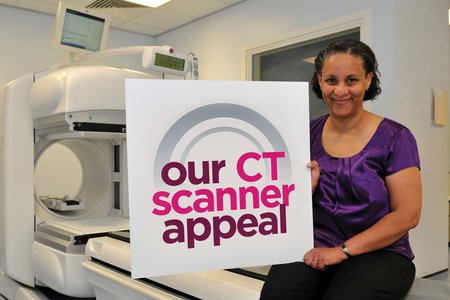
You can help more patients get diagnosed and treated faster by supporting the latest CT Scanner Appeal in Gloucestershire - patients such as seriously ill children and people with cancer.
This page provides Fever advice for children and young people
This page provides information for patients who may need to have an indwelling pleural catheter.
This report aims not only to comply with the requirements of the Equality Act 2010 but also to highlight good practices and identify gaps in both service provision and staff support. It captures data required under the general duty and showcases our ongoing Equality, Diversity and Inclusion (EDI) initiatives.
You have been advised to have a gastroscopy and colonoscopy (also known as an endoscopy) to help investigate the cause of your symptoms. It is important that you read this information before your appointment so that you understand what will happen during these procedures and the preparation needed.
You have been advised to have a therapeutic gastroscopy which provides treatment carried out via an endoscope. A gastroscopy may also be referred to as an endoscopy or OGD (meaning an oesophageal-gastroduodenoscopy).
This page gives you information about the operation known as Transanal Endoscopic Microsurgery (TEMs). It explains what the operation involves and some of the common complications associated with it.
You have been advised to have a trans-nasal endoscopy to help us to investigate the cause of your symptoms. This page contains information about having a transnasal endoscopy through the nose. It is important that you read this page before your appointment so that you understand about the procedure and the preparation involved.
This page gives you information about the oesophageal stent procedure. It is important that you read this page before your appointment so that you understand what will happen during the procedure and the preparation involved.