We use cookies to provide you with a better service. Carry on browsing if you’re happy with this or read more about our cookie policy and privacy policy.
This page is for patients diagnosed with a cancer in the rectum (back passage). The information will help you to understand the patient pathway, and make you aware of the various treatment options that might be available to you.
Our Quality Account for 2012 – 2013
You have been offered a treatment to your oesophagus (gullet) called Radio Frequency Ablation (RFA). This page contains information about the treatment and will hopefully answer any questions that you may have. It is important that you read this information so that you understand why you have been recommended for this treatment and what it involves.
This page gives you information about pelvic floor muscles and how you can exercise to strengthen them.
We collect, store and process information about prospective, current and former staff. This notice explains how we use your information, and your right to control how we use it.
This page aims to help guide you through your recovery from gynaecological surgery.
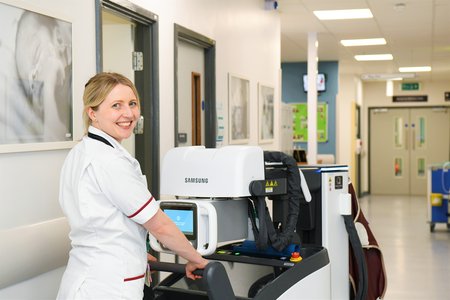
Your support has raised over £3.3million to fund the latest state-of-the-art imaging equipment to help over 40,000 patients every single year
diathlete sports clinic event
by Rachael Edge
Cancer antigen 15.3 (CA 15-3) should only be used to determine response to therapy in patients with metastatic breast cancer or for the early detection of recurrence in patients with previously treated stage II and stage III breast cancer. Requests should therefore only be made as advised by the specialist secondary care team.
Parents and loved ones affected by baby loss could soon be able to visit a new garden of remembrance as part of our Big Plus Fund.
This page gives information to patients having a peripheral intravenous (IV) cannula tube inserted into a vein. This is usually into the back of your hand or your arm (see Figure 1 and 2).
The central slip is the name given to the tendon responsible for pulling the middle knuckle joint straight. Usually, the proximal interphalangeal joint or second knuckle joint becomes swollen and tender, and the finger will not pull straight easily.
This is a guide to keep your child safe and help them recover from their head injury. Your child has been assessed and is able to go home. Please make sure they are with an experienced carer who is able to closely observe them for the next few days.
Here you can find the frequently asked questions from patients using the Rheumatology service.
Do you want to do more to help make a difference at Gloucestershire Royal and Cheltenham General Hospitals? Opportunities are now available to become a governor.
On Earth Day on 22 April 2024, we are part of a One Gloucestershire campaign designed to promote the correct use of gloves, which are often worn unnecessarily
Non- Gynae Cytopathology
Carbapenamase-Producing Enterobacteriaceae (CPE) screen