We use cookies to provide you with a better service. Carry on browsing if you’re happy with this or read more about our cookie policy and privacy policy.
Changes to Cheltenham A&E during BMA Industrial Action 17 - 22 December
The number of cases of Measles in young people has risen, and measles outbreaks have been reported in adjoining counties. Measles is an infection that spreads very easily and can cause serious problems in some people.
The Gloucestershire NHS Procurement Shared Service is hosted by Gloucestershire Hospitals NHS Foundation Trust (GHNHSFT) and is set up to provide procurement services and advice to three organisations: our Trust, Gloucestershire Hospitals Subsidiary Company Limited (GMS) and Gloucestershire Health and Care NHS Foundation Trust (GHC).
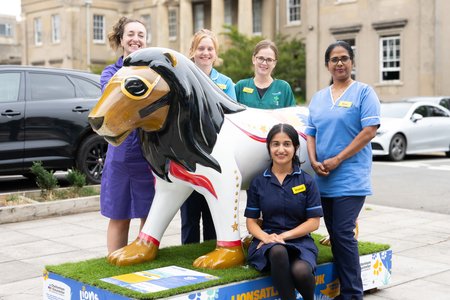
Our pride of lions that has captivated the community will be going under the hammer to raise funds for a new state-of-the-art cancer centre in Cheltenham
This page gives you information about a tracheostomy and why you may need to have one.
Every donation you choose to give helps your local hospitals do more to care for you, everyone you love and our passionate staff
You have been referred this page because your kidneys are no longer functioning efficiently. Excess water and waste need to be removed from your body in another way, through dialysis. The method of dialysis you have chosen is peritoneal dialysis. To enable you to have this type of dialysis, you will need a Peritoneal Dialysis (PD) catheter.
Being part of a cardiovascular research trial makes me feel that I'm getting a little bit extra’ - Ann’s story
This page gives you information about having a robotically assisted Total Laparoscopic Hysterectomy (TLH) and answers some of the questions that you may have.
Here you'll find answers to the questions we get asked the most about.
This page is to inform you about how some of your medicines will be supplied. The medicine(s) shown on this page will be delivered to you by a clinical homecare provider.
This page is to inform you about how some of your medicines will be supplied. The medicine(s) shown on this page will be delivered to you by a clinical homecare provider. The hospital clinical team uses a homecare provider to dispense and deliver certain medicines. At your hospital appointment your medication will be reviewed and a prescription written. You will not need to collect the medication from the pharmacy department in the hospital or get a prescription from your GP. Instead, your prescription will be sent directly to the homecare provider specified. Within a few days of receiving your prescription the homecare provider will call you to arrange a time and location for the delivery of your medication (and any other items required to use the medicine such as syringes). In addition to this page, you may be sent an information pack from the homecare provider. The pack will give you more details about the service they offer and provide you with the contact details of the homecare Patient Services department. This will enable you to contact them if you have any concerns or if you no longer wish to use this service.
Post-transfusion purpura (PTP) is a delayed adverse reaction to a blood or platelet transfusion that occurs when the body has produced antibodies to the donor transfused platelet antigens. These antibodies destroy the patient's platelets leading to a rapid decline in platelet count. PTP usually presents 5–12 days after transfusion.
Your doctor has prescribed Qutenza® to treat your nerve (neuropathic) pain. Nerve pain is often described as burning, stabbing and aching or like an electric shock. This type of pain usually has no clear cause. The pain may be due to shingles, diabetic neuropathy or damage to your nerves following an accident, injury or surgery. This page gives you information about Qutenza® treatment and answers some of the commonly asked questions.
This page gives you information about spiking, how it can affect you and what you should do if you think you have been spiked.
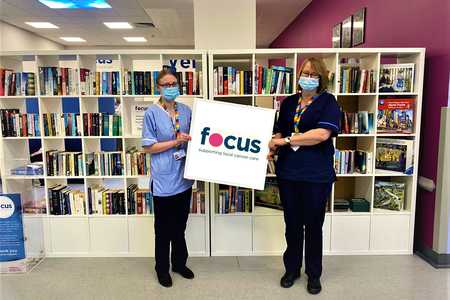
Thanks to donations to our Focus fund, a new research role is helping to make a real difference for local cancer patients and NHS staff.
Hereditary haemochromatosis (HH) is a very common inherited disorder of iron metabolism, characterised by inappropriately high absorption of iron, leading to excessive storage in the liver, skin, pancreas, heart, joints and testes.
During this time when staffing is very challenging due to COVID-19 related sickness, it may be necessary for us to flex our maternity services and redeploy our midwives to alternative locations where they can provide safe, one-to-one care during your labour.
This page gives you information about miscarriage. Miscarriage can be a distressing experience, not only because you feel the deep emotional sadness of losing a baby, but also the changes that your body will go through may affect the way that you are feeling. We would like to offer our condolences to you and will try to help by answering any questions you have.
This page has been designed to help you exercise your sphincter muscles. Sphincter exercises can help you to reduce leakage from the bowel. These exercises are also beneficial for patients who are due to have a colostomy or ileostomy (stoma) reversal operation. When done correctly these exercises can build up and strengthen the muscles to help you to hold both wind and stool in the back passage.
This page gives you information about having a bone marrow biopsy, what the procedure involves and answers the frequently asked questions.