We use cookies to provide you with a better service. Carry on browsing if you’re happy with this or read more about our cookie policy and privacy policy.
You have been given this page as you or someone you care for has had a Barium Swallow. A Barium Swallow is an examination of the food pipe (oesophagus) and stomach. The complete removal of barium from your digestive system usually takes between 24 hours and 72 hours. This page tells you what to expect after having this procedure and suggests ways to help.
by Dr Marcin Pachucki
The crossmatch is defined as a procedure to exclude incompatibility between donor red cells and the patient’s plasma
Microbiology
Your kidney mass has been surgically removed and analysed by our pathology department. It has been confirmed as a renal cell carcinoma (a kidney cancer).
by Charlotte Jakab-Hall & Sophie Finch Turner
Any member of the Gloucestershire Hospitals NHS Foundation Trust can nominate themselves for a governor vacancy in their constituency.
From Monday 9 March until Saturday 14 March, Gloucestershire Hospitals will be celebrating its healthcare scientists and the role they play in making a difference to patients’ lives as part of national Healthcare Science Week.
Thanks to donations to Focus and investment from the Trust, work has begun on a new PACE research trial at the Gloucestershire Oncology Centre.
By A Creamer, S Alaee, H Iftikhar, F Ahmed, H Steer, C Sharp
This Five-X-More sculpture was carved by the Gloucester-based artist Deborah Harrison
Viscopaste bandaging is a zinc oxide paste infused bandage and is recommended in the management of chronic leg ulcers and eczema.
by Richard Sidebottom
by Margaret Collins
by Natalie Gaskell
Insulin-like growth factor-1 (IGF-1) in the circulation originates mainly from the liver under control of pituitary growth hormone (GH). Levels of IGF-1 parallel those of GH.
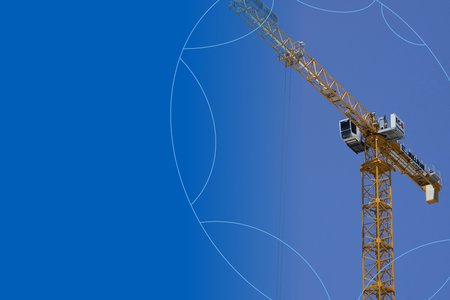
To install critical infrastructure for the Emergency Department (ED) extension, we’re bringing in a large crane from 12 September that will be lifted over the front of the Atrium. Alternative access for drop-offs is available.
The exercise information in this page has been written to help men who leak stool from their back passage or find it hard to control wind. Performing these exercises can help you to reduce leakage from the bowel by strengthening the sphincter muscles. If you are due to have a colostomy or ileostomy (stoma) reversal operation these exercises have been shown to help regain control more quickly. Practising these exercises daily can help you hold both wind and stool in the back passage.