We use cookies to provide you with a better service. Carry on browsing if you’re happy with this or read more about our cookie policy and privacy policy.
You have been referred this page because you are going to have the outpatient endometrial ablation treatment. This page gives you information about the treatment, your visit to the hospital and advice following your discharge.
You have been advised to have a trans-nasal endoscopy to help us to investigate the cause of your symptoms. This page contains information about having a trans-nasal endoscopy through the nose.
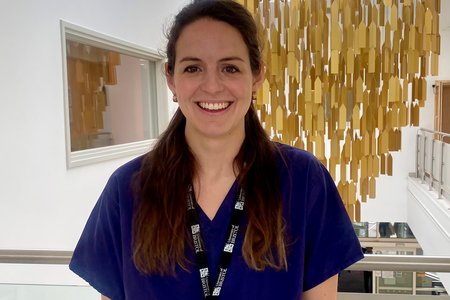
Thanks to your support, a new research role has been funded to help support patients recovering from weight loss surgery.
I wanted to care for people but not as a nurse (initially)! I got into nursing because I could not do Medicine back then. Several events orchestrated and confirmed my pathway into nursing; once I got in, I loved it with a passion and I've never looked back.
by Elinor Beattie
“A butterfly lights besides us like a sunbeam, and for a brief moment its glory and beauty belong to our world: but then it flies again. And though we wish it could have stayed; we feel so lucky to have seen it”
You have been advised to have a gastroscopy and colonoscopy (also known as an endoscopy) to help investigate the cause of your symptoms. It is important that you read this information before your appointment so that you understand what will happen during these procedures and the preparation needed.
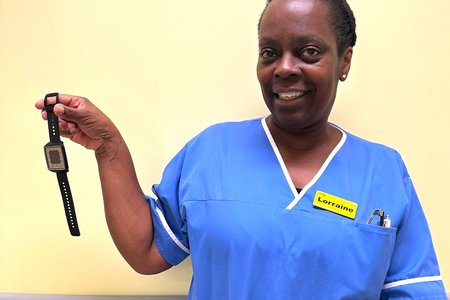
Thanks to your support, fifty Parkinson’s Kinetograph (PKG) smart watches have been funded that enable specialist doctors to remotely evaluate a patient’s condition from their own home.
This guidance relates to the management of peripheral noradrenaline (NA) infusions. It includes: safety profile, indications for peripheral NA, monitoring of patients on peripheral NA, practical advice and finally the management of extravasation
Find out more about how we use patient information at Gloucestershire Hospitals NHS Foundation Trust. This notice will also apply, where appropriate, to information we hold about patients’ carers relatives and next-of-kin.
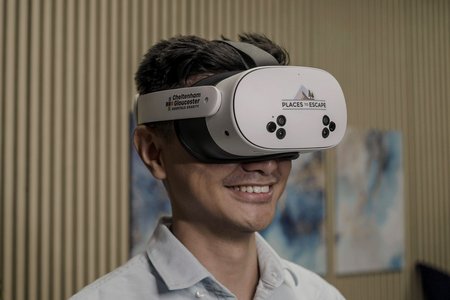
Thanks to your support, charity-funded headsets are bringing comfort and connection to patients through the power of virtual reality.
This page gives you information about the procedure known as a right hemicolectomy and extended right hemicolectomy which are performed to remove a diseased area in your bowel. It explains what the procedures involve and also some of the common complications associated with them.
by Zoe Brown
You have been told you are likely to have uric acid stones, these are the only stones which may be dissolved by changing the pH of urine.
This page gives you information about the reversal of Hartmann’s procedure. It explains what the procedure involves and some of the common problems that patients may experience with it.
Gloucestershire Royal Hospital has today (Monday 27 September) unveiled a new piece of specially commissioned floor-to-ceiling artwork in its A&E department as part of a focus on improving the experience of patients in mental health crisis.
Having a nosebleed is common and it is usually mild and easily treated. Some nosebleeds can be more severe which is usually the case in older people who have other medical conditions. This page gives you information about what causes a nosebleed and the different treatments available for children and adults.
Hysterectomy can be carried out abdominally, vaginally, laparoscopically or in a combination of these routes. This page gives you information about having a laparoscopic (keyhole) route of surgery called Total Laparoscopic Hysterectomy (TLH) and answers some of the commonly asked questions.
An ERCP has been arranged to either help us find out the cause or for the management of your symptoms. This page gives you information about the ERCP procedure and the possible risks involved.
This page gives you advice and information about Prostap® or Zoladex® treatment for non-cancerous gynaecological conditions such as fibroids, endometriosis and severe Premenstrual Syndrome (PMS) or Premenstrual Dysphoric Disorder (PMDD). Please see below for explanations of these conditions.