We use cookies to provide you with a better service. Carry on browsing if you’re happy with this or read more about our cookie policy and privacy policy.
BMA Resident Doctors’ Industrial action – 7 April to 13 April and temporary changes to Cheltenham A&E
Your doctor has prescribed a blood thinning medication for you to take called heparin. This medication is developed from the lining of the small intestine of pigs. This page gives you information about the medication and the Muslim and Jewish teachings relevant to its use. Individuals following a vegan lifestyle or avoiding pigbased products for any other reason may also find this information useful.
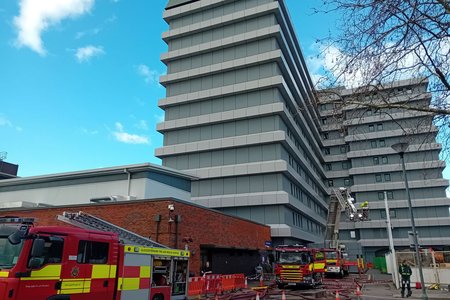
Gloucestershire Royal Hospital hosted a large scale multi-agency emergency services exercise on Saturday 28 February 2026.
Cerebral Spinal Fluid (CSF) cell count, microscopy & culture
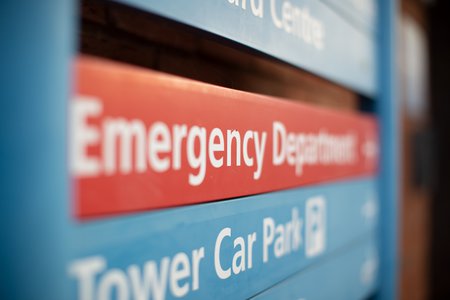
From Wednesday 10 April, we are introducing a 12-week body camera trial in our Emergency Department (ED) in Gloucestershire Royal Hospital that aims to increase security and safety for patients, staff and the public.
Maintenance work at the Women’s Centre on Saturday 25 March means that hot water will be unavailable from 8am – 5pm.
The key features of the Badger Notes app and how to create a Badger Notes account.
Your donations help to provide specialist care and wellbeing support when people need it most
This page gives you information about a condition called subconjunctival haemorrhage which is often described as blood shot.
This page gives you information about what to expect when leaving the Emergency Department after having had sedation. You have been given a sedative medication to assist with your procedure. You may experience a short period of memory loss during the time the sedation is effective. This medication may also impair your judgment for up to 24 hours. Sedation is safe with very few side effects but most patients have feelings of tiredness afterwards. Some people may believe they are fine and unaffected by the medication but their reactions will be slower. This is similar to how some people may feel after having alcohol.
A patient’s experience of using our hospital services should be positive. We want all of our patients, their families, carers and friends to feel confident in our services.
This page gives you information about having lithotripsy treatment for kidney stones.
You might take a break from your medical training for a number of reasons, including:
This page gives you information about what to expect when a child comes into hospital to have an operation or an investigation under general anaesthesia.
As we come to the end of 2020, we would like to personally thank each and every one of you for your outstanding dedication, in what has been one of the most difficult years we have ever experienced as an NHS trust.
Supporting innovation, research and sustainable projects for the future of our community
by Lowri Bowen
You have been referred this page because you, or someone you care about, is considering or waiting for pharyngectomy surgery. This page helps you to know what to expect before and after having a pharyngectomy.
You have been advised to have a gastroscopy, which you may also have heard being called an endoscopy or OGD (meaning an oesophageal-gastro-duodenoscopy). A gastroscopy will help us to investigate the cause of your symptoms. It is important that you read this page before your appointment so that you understand what will happen during this procedure and the preparation involved.
This page gives you information about a procedure known as Evacuation of Retained Products of Conception (ERPC). It answers some of the commonly asked questions about this procedure.
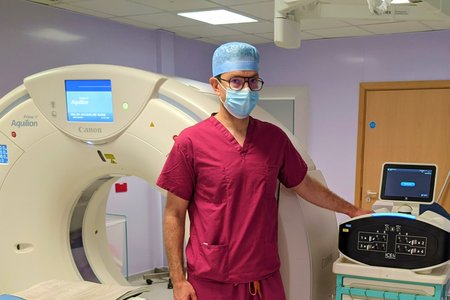
This page gives you information about having a CT (Computed Tomography) scan of the heart.