We use cookies to provide you with a better service. Carry on browsing if you’re happy with this or read more about our cookie policy and privacy policy.
Changes to Cheltenham A&E during BMA Industrial Action 17 - 22 December
This page is designed to provide carers/family and friends with information if the person they are caring for discharges themselves from hospital against medical advice. This is known as self-discharge.
The learning technology team at Gloucestershire Hospital NHS Foundation Trust (GHNHSFT) has been named Learning and Development Team of the Year, at the fifth Our Health Heroes Awards, for their rapid delivery of an eLearning package that helped ensure more staff had the skills to care for people with respiratory problems, within days of the COVID-19 outbreak.
This page gives you information about what to expect when you have surgery to amputate a limb. After reading this page, if you have any questions that have not been answered, please ask a member of the clinical staff looking after you or your surgeon.
This page gives you information about having a CT colonoscopy, how the test is done, the risks involved and what to expect. A CT colonoscopy is also known as a virtual colonoscopy.
The Care Quality Commission’s (CQC) has published their report following Inspection in December 2023 of the Trust’s Stroud Maternity Unit (SMU), which resulted in a rating of ‘Requires Improvement.’
This page gives you information about tests used to help identify problems at the back of the eye.
by Khoboso Hargura
It is essential that your bowel is empty for this investigation. In order for your bowel to be empty please follow the instructions below.
This page provides information for patients due to attend the Low Vision Aid (LVA) Clinic.
Find out more about each level of the training pathway and the QI programme.
The Care Quality Commission (CQC) published results of its national maternity survey on Friday 9 February.
This leaflet will explain why you are being offered the Hepatitis B vaccine. Patients with chronic kidney disease are at an increased risk of Hepatitis B virus infections due to the increased exposure to blood and blood products. All donated blood is tested for Hepatitis B. However, the Department of Health recommends that all patients with kidney failure are vaccinated against the virus.
A full range of dermatology conditions, including:
Mr Torrie completed his Orthopaedic higher surgical training in the Severn Deanery, before completing a complex cervical spinal fellowship. He started his NHS consultant post in Gloucestershire Hospitals NHS Foundation Trust in 2017.
I chose nursing as my career because I have always enjoyed helping people to have the best quality of life. My passion also is about providing exceptional care to the vulnerable to support their recovery and nursing allows me to achieve this holistically .
The 13th GSQIA Graduation and Awards Ceremony took place on Friday, 28th of June 2019 from 9:30am – 12.30pm in the Lecture Hall at Redwood Education Centre, Gloucestershire Royal Hospital.
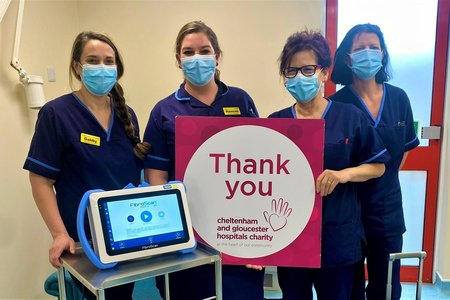
A Fibro Scanner is a type of ultrasound that is used to assess liver fibrosis in a non-invasive way. The equipment can help to provide a prompt diagnosis, which is especially important as 90% of liver disease is reversible if detected early. This also enables the hepatology team to organise a treatment plan as soon as possible for patients. The Fibroscan procedure is quick and painless, and can also help in emergency situations by providing accurate readings of liver damage in less than 15 minutes.
Going through a cancer diagnosis and treatment can be a very difficult time. The condition itself, treatments and the stress from the experience may affect your vulval and vaginal health. This page explains the possible effects you may experience and ways these can be managed.
Listed below are a number of frequently used local treatment guidelines. Please use the search function above if the guideline you require is not listed. Alternatively, search for treatment guidelines hosted on the GHNHSFT intranet (intranet access required).
Hereditary haemochromatosis (HH) is a very common inherited disorder of iron metabolism, characterised by inappropriately high absorption of iron, leading to excessive storage in the liver, skin, pancreas, heart, joints and testes.