We use cookies to provide you with a better service. Carry on browsing if you’re happy with this or read more about our cookie policy and privacy policy.
Changes to Cheltenham A&E during BMA Industrial Action 17 - 22 December
You have been asked to attend Same Day Emergency Care (SDEC) or the Ambulatory Emergency Care (AEC) departments because you may have an infection in your legs called cellulitis. This page contains information about lower limb cellulitis and how it will be treated.
You have attended Same Day Emergency Care (SDEC) or the Ambulatory Emergency Care (AEC) department because you have a tiny tear on the outer part of your lung. This is called a spontaneous primary pneumothorax. This page gives you information about what to expect when treated for a spontaneous primary pneumothorax.
This page explains what an opioid is and why it is beneficial to some patients who have acute pain.
This page provides information about oral hygiene and mouth care for patients having radiotherapy or chemotherapy treatment. You may experience a dry or sore mouth or notice taste changes when you are having radiotherapy or chemotherapy treatment. These problems can be due to the treatment you are receiving. It is very important that you tell your healthcare professional (nurse or radiographer) if you experience these changes as they may be able to recommend specific treatments for you. These symptoms might continue for some time after your treatment has finished but the suggestions in this page may help to keep you comfortable. Good mouth hygiene is essential.
This page gives you information about the condition you are being assessed for and the processes carried out during the assessment.
Friday 5 May 2023 is International Day of The Midwife when we celebrate our midwives and everything they do for our community
This page describes the laparoscopic (keyhole) operation to treat acid reflux and hiatus hernia. It explains the risks and benefits of surgery and the likely after effects. Dietary advice will be available from the ward before you are discharged.
This page gives you information about penicillin and how a test is taken to find out if you are allergic to this medication.
Sputum
Gloucestershire Hospitals NHS Foundation Trust has created a carers' charter to outline how the Trust and local community can work together as partners in delivering exceptional patient care.
The principles of equality, diversity and inclusion are fundamental to the successful delivery of patient care and these underpin our vision of the best care for everyone.
This page gives you information about your immunoglobulin treatment.
At Gloucestershire Royal Hospital, we believe that every baby being born is special. During your caesarean, there are ways in which we can help to assist you have an individual experience for the birth of your baby.
The Muslim Community in Gloucester has raised over £8000 for a new high-tech birthing bed for use in the Women’s Centre at Gloucestershire Royal Hospital.
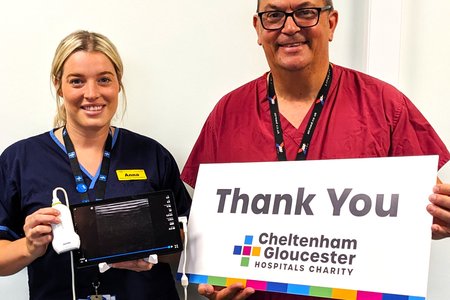
Local patients are now benefitting from the ‘VScan Air’ Wireless Ultrasound to help provide faster and more accurate treatment at our hospitals.
This is an exciting opportunity to make a difference to our patients this winter.
Information on our philosophy of care and services
Increasing rates of COVID infections in younger age groups means that from 6 August, we will require evidence of a negative test result within the last 24 hours