We use cookies to provide you with a better service. Carry on browsing if you’re happy with this or read more about our cookie policy and privacy policy.
This page gives you information about the specialist team for Inflammatory Bowel Disease (IBD), the services available and the IBD Advice line.
You might take a break from your medical training for a number of reasons, including:
This page gives you information about the main pain relief options available after major surgery. You will probably only need this pain relief for the first few days following surgery. Pain is to be expected after surgery and poor pain relief can increase the risk of complications. Our aim is to make sure that you receive the best possible pain relief. Good pain relief is a high priority, the benefits are: • It can help you to get better. • Your overall experience will be much better. • It can shorten the length of your hospital stay. • It can reduce your risk of complications such as developing a chest infection.
This industrial action by Resident Doctors, led by the British Medical Association (BMA), will take place from Wednesday 17 December (7am) until Monday 22 December (7am)
NHS Stroke services Gloucestershire
In 2013, I celebrated my 36th birthday with my twin brother Tim, with a family lunch, a trip to the Lego store, followed by an appointment that night for a short stay at Royal Liverpool Hospital.
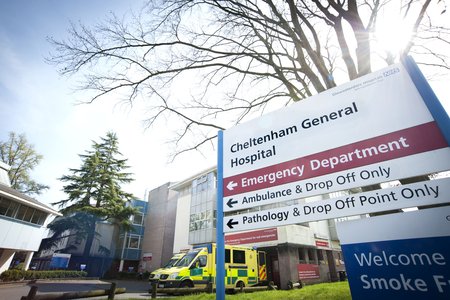
If you’re a patient who smokes, our Tobacco Free Team are here to help as part of your stay in hospital.
You have been invited to attend the Haematology Clinic. This page gives you information about what will happen at the clinic and the staff you may meet. Haematology is the study of blood and the bone marrow. People attending these clinics will usually be suspected of having a problem with their blood.
Help us build a bigger, brighter home for cancer care - for you, your loved ones, your community.
Hearing Services offer a full range of rehabilitation on the two main sites, Cheltenham General Hospital, and Gloucestershire Royal Hospital.
A project that funded a Homelessness Specialist Nurse in the Emergency Departments (EDs) at Gloucestershire Hospitals has been recognised at the prestigious HSJ Patient Safety Awards.
The orthoptic exercises described on this page have been advised and explained to you by your orthoptist. This page is provided as a reminder to keep at home of how to complete the exercises. Only do the exercises which you were advised to do.
The information on this page explains what non-invasive ventilation (NIV) is and when it might be used. It may also answer some of the questions that you may have about NIV. This page is not meant to replace the consultation between you and your medical team but may help you to understand more about what is discussed. Please do not hesitate to speak to the doctor, nurse or physiotherapist if you have any further questions.
An ultrasound scan is a test that uses high frequency sound waves to build a picture of your baby in the womb. Ultrasound scans are very safe and can be carried out at any stage of pregnancy.
You have been advised to have a gastroscopy, which you may also have heard being called an endoscopy or OGD (meaning an oesophageal-gastro-duodenoscopy). A diagnostic gastroscopy will help us to investigate the cause of your symptoms.
Your doctor has prescribed Qutenza® to treat your nerve (neuropathic) pain. Nerve pain is often described as burning, stabbing and aching or like an electric shock. This type of pain usually has no clear cause. The pain may be due to shingles, diabetic neuropathy or damage to your nerves following an accident, injury or surgery. This page gives you information about Qutenza® treatment and answers some of the commonly asked questions.
(First trimester screening) An ultrasound scan is a test that uses high frequency sound waves to build a picture of your baby in the womb. Ultrasound scans are very safe and can be carried out at any stage of pregnancy.
This page explains what psychological support is available for kidney patients. If you have any questions, please speak to a member of the renal team or contact the psychology team on the phone number at the end of this page.
The next phase of involvement for the Fit for the Future programme is now underway. The engagement will listen to what matters to people in exploring ideas on how to organise several specialist health services over the medium to long term.