We use cookies to provide you with a better service. Carry on browsing if you’re happy with this or read more about our cookie policy and privacy policy.
This page provides information for renal patients with a fistula or graft who need a fistulogram or fistuloplasty. The page answers some of the commonly asked questions about having a fistulogram or fistuloplasty. It also explains the benefits, risks and alternatives to the procedure.
This page gives you information about spiking, how it can affect you and what you should do if you think you have been spiked.
You have been referred to the Gynaecology Rapid Access Clinic for assessment and/or treatment. Our priority is to confirm or exclude a diagnosis of gynaecological cancer. You should be prepared to be available throughout the process and to attend any further tests or appointments, approximately a total of 6 weeks. Tests may include bloods tests, MRI, CT and pre-assessment appointments. This page provides information about the clinic and the investigations or treatments that may be offered during your visit.
This page gives you information about Urinary Tract Infections (commonly known as a UTI) and how they can be treated, managed and prevented. Also included are the common symptoms of UTI’s.
We're working in partnership with Gloucestershire Libraries to promote free digital library services, including thousands of eBooks, eAudiobooks, eMagazines and eNewspapers that can be enjoyed via your smart phone, tablet, or laptop.
This page gives you information about the care you will need following a thoracoscopy.
This page gives you information about stress fractures, how they happen and how to help them repair and be less painful.
The ‘End PJ paralysis’ campaign aims to help patients to become active in their recovery, keep their independence and help improve mental wellbeing and dignity.
New Hub supports staff through the pressures of work and modern life
This page explains what a molar pregnancy is, how it is diagnosed and how it is treated. It also answers the frequently asked questions.
by Margaret Collins
by Matthew Crockett
This page gives you information about the hormone coil recommended by your doctor.
This page gives you information about having a bone densitometry scan, the risks involved and what you need to do to prepare for the scan.
This page gives you information about a procedure known as Evacuation of Retained Products of Conception (ERPC). It answers some of the commonly asked questions about this procedure.
Providing timely and appropriate care in the most suitable setting is essential for stroke patients’ long-term recovery.
This page has been written for people who are considering a genetic test following a cancer diagnosis. It talks about testing for a genetic condition called Lynch Syndrome.
This page gives you information about having a CT colonoscopy, how the test is done, the risks involved and what to expect. A CT colonoscopy is also known as a virtual colonoscopy.
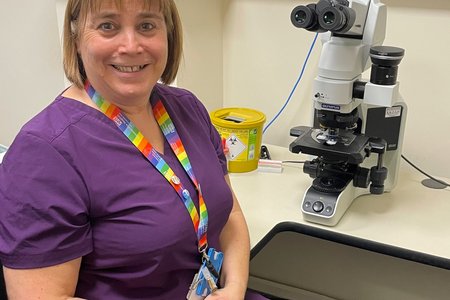
Thanks to our generous supporters, a new high-tech haematology microscope has been funded to support local cancer patients.
This page provides you with basic information about vaginal vault prolapse and how it is repaired with a procedure called pelvic floor repair and sacrospinous fixation. Sacrospinous fixation is a vaginal procedure performed for women who have developed vaginal vault prolapse after a hysterectomy.